Epoxy Flooring Contractors

The Complete Epoxy Growth System. Installed For You.

Weekend tire-kickers and price shoppers eat your quoting time. DTG installs garage and commercial campaigns plus a floor visualizer that turns browsers into real quote requests. One operator per city. Live in 5 business days.

2-min check · We reply within 1 business day · No obligation.

Floor Visualizer Garage + Commercial Qualified Estimates
  • Live in 5 business days
  • One operator per city
  • You own every account & lead
Contractor applying a glossy metallic epoxy coating to a residential garage floor
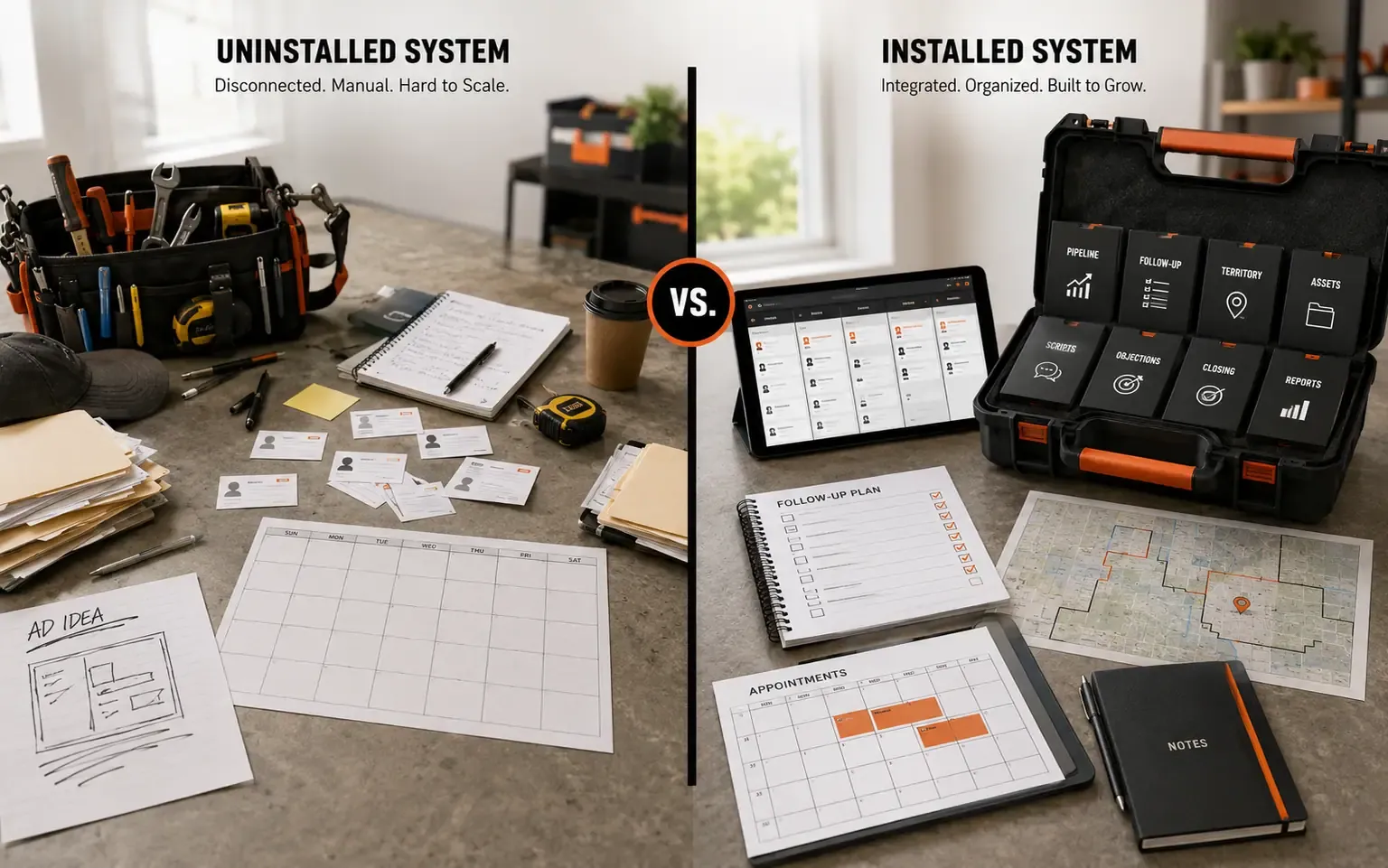
An uninstalled, disconnected marketing setup beside the installed DTG system
The Problem

You Don't Need More Ad Accounts. You Need One System That Books Jobs.

Most epoxy contractors run scattered Google ads, a Facebook page, and a slow website — none of it connected, so weekends go to quoting price shoppers who never book. DTG replaces the pile with one system: targeted garage and commercial campaigns, a floor-finish visualizer that turns browsers into qualified quote requests, and follow-up that never misses a lead.

Epoxy is a lower-ticket trade than most of the trades around it, and that quietly changes the whole math. A residential garage floor usually lands in the low thousands, so you can't win by paying a roofer's price for a lead — your cost per lead has to stay tight and your crews have to stay full. That means volume, speed, and a campaign built to book installs, not collect clicks. Buy generic shared leads at that ticket and the margin is often gone before the truck leaves the shop — the same lesson operators learn in broader flooring lead generation, where the cheapest lead is rarely the one that actually books.

One message won't cover it, either. A homeowner choosing a flake color for a garage floor is nothing like a facilities manager speccing an industrial coating for a warehouse — and neither is the restaurant owner who wants a seamless metallic epoxy showroom floor. The finish is a visual decision buyers make before they ever pick up the phone, which is exactly where most epoxy advertising falls down: it sells a service when the buyer is shopping a look. On top of that, installs are weather- and cure-sensitive, so timing matters, and most owners would frankly rather run a diamond grinder all day than learn Meta Ads Manager. You shouldn't have to become an ad expert to keep the calendar full.

  • One pipeline instead of five disconnected tools
  • Every lead captured, qualified, and followed up automatically
  • One report — cost per booked estimate, not vanity clicks
The Epoxy Angle

Let Buyers Lock In Their Finish Before They Ever Call You.

Epoxy is sold on the finish, not the spec sheet. A homeowner who can already picture their garage in a copper-and-black metallic swirl wants it — and a facilities manager who has locked the exact flake blend for a showroom floor starts the conversation at a real price point, not a lowball. DTG's floor visualizer lets residential, commercial, and industrial buyers preview their finish right on your landing pages — flake color, metallic epoxy pattern, or a clean polyaspartic topcoat — and turns browsers into named quote requests before your phone ever rings. By the time they reach you, the look is decided; the call is about scope and schedule.

  • Garage, showroom, and industrial coating previews — flake, metallic epoxy, or solid color
  • Buyers choose their chip broadcast and topcoat before they ever submit the form
  • Instant quote flow captures name, address, and finish choice into your CRM
  • Higher close rate, shorter sales cycle — buyers arrive already sold on the finish
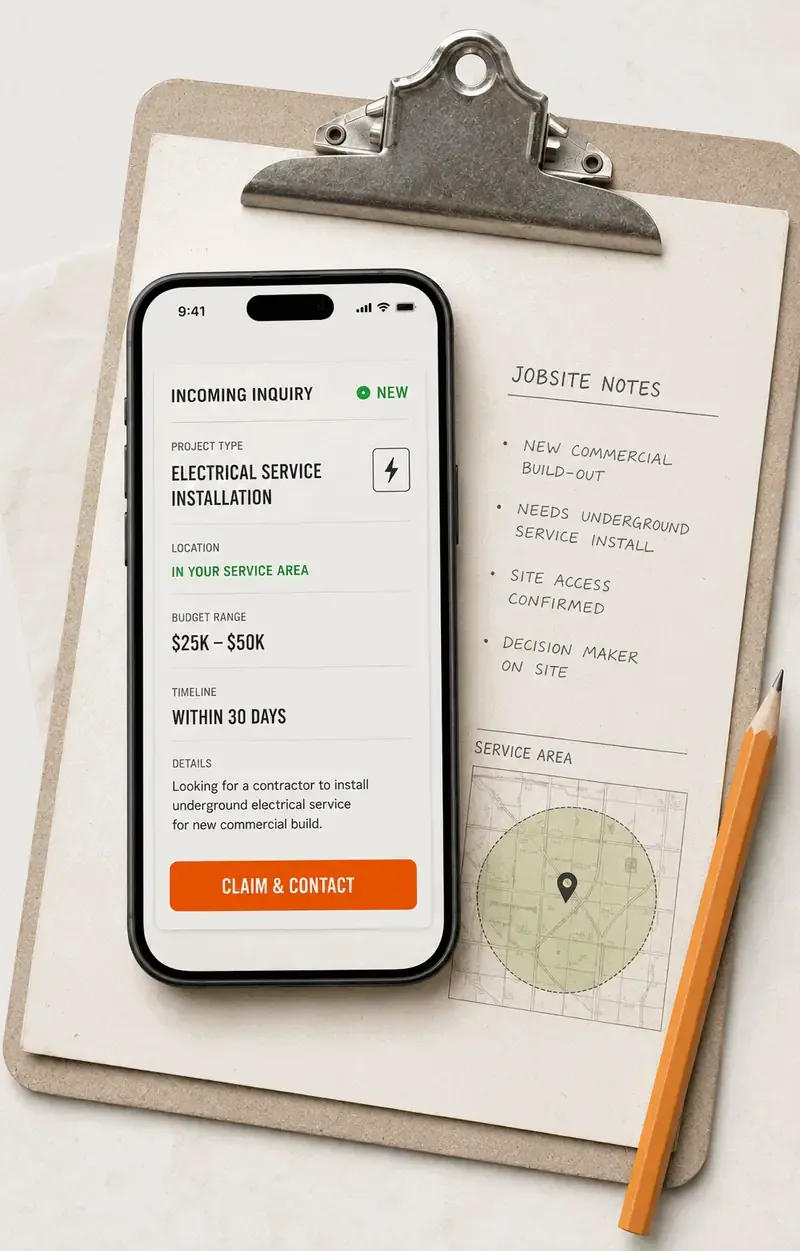
DTG lead capture in action — a epoxy coatings job inquiry logged from phone to clipboard intake DTG contact and follow-up on a laptop — new epoxy coatings leads flowing into the CRM pipeline
Fully Installed For You

Nine Systems. One Install.

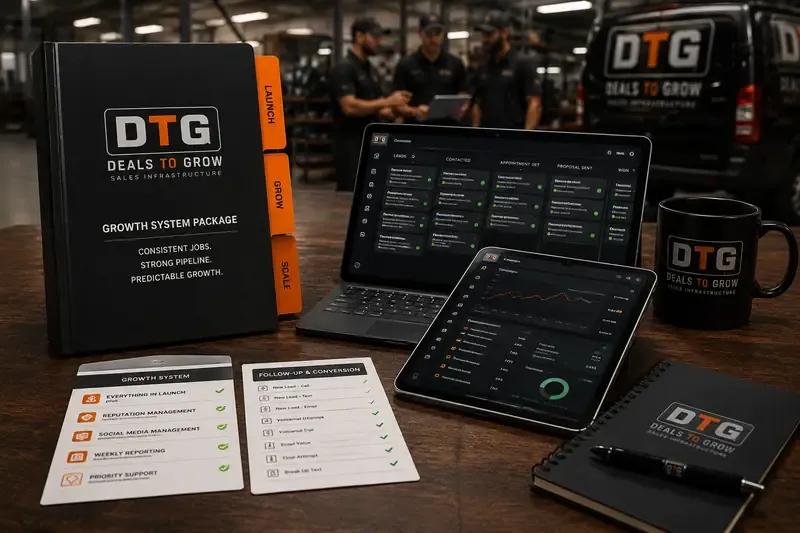
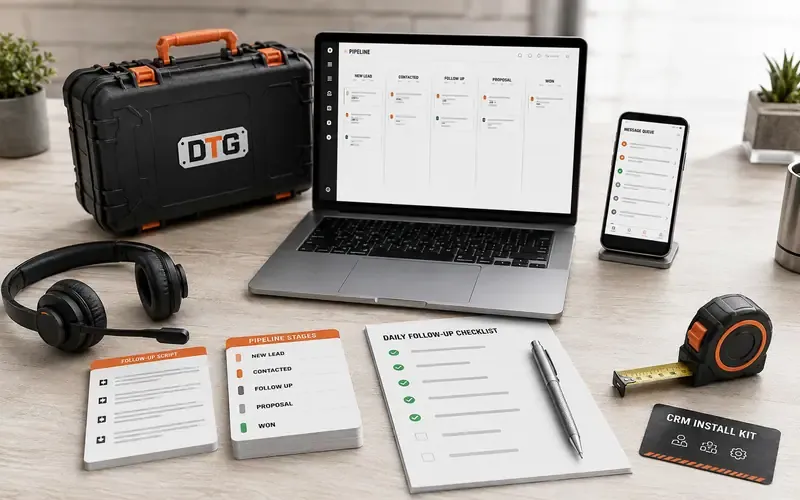
The complete DTG growth system — built, connected, and managed for you. One install kit, nine systems wired into one machine you own. No piecing it together.

01

Meta Ads

Paid campaigns that pull high-intent buyers in your market.

02

Google Ads + LSA

Capture high-intent “near me” search the moment they look.

Grow and Scale plans.
03

AI Receptionist

Answers every lead in under 12 seconds, 24/7.

Grow and Scale plans.
04

CRM (KaChing)

Every lead, estimate, and job in one pipeline you own.

05

Email + SMS Automations

Confirmation, missed-call, quote booking, follow-up, and review & referral requests — automated end to end.

06

Reporting Dashboards

CPL, booked jobs, and revenue — tracked live.

07

Reputation Management

More 5-star reviews, on autopilot.

Scale plan.
08

Social Media Management

Before/after proof your market sees.

Scale plan.
09

Authority Website

Optional add-on — built once, yours to keep.

Three Markets. One System.

Residential. Commercial. Industrial.

The DTG system is calibrated for all three epoxy markets — campaigns, landing pages, and follow-up sequences built for each buyer type.

Residential garage with polished metallic flake epoxy floor

Residential Garages

High-intent homeowners who want the finish, not just a quote. Our campaigns target buyers ready to commit.

Commercial showroom with polished epoxy floor

Commercial Showrooms

Restaurants, retail, and offices booking larger jobs with longer relationships. Better margins per install.

Industrial warehouse with reflective epoxy floor

Industrial Facilities

Warehouses, manufacturing plants, and logistics floors — high square footage, recurring maintenance contracts.

The Epoxy Math

Lower Ticket, Tighter Margin — Speed And Volume Win.

Epoxy pays differently than the big-ticket trades, and the marketing has to respect that. Here is how the numbers actually work — and why owning the system beats renting leads at this ticket size.

In most markets a residential garage floor runs somewhere around $2K to $6K, depending on square footage, prep, and whether the buyer wants a basic chip system or a full metallic epoxy pour. Commercial and industrial work — a restaurant showroom floor, a warehouse industrial coating, a multi-bay service shop — runs far higher, often several times a garage. Those are honest, typical ranges, not a quote; your real numbers depend on your metro, your crews, and your finishes. But the shape holds everywhere: residential is lower ticket at higher volume, while commercial and industrial are fewer jobs at much bigger tickets.

Because the residential ticket is lower, your cost per lead has to stay tight — in many metros a booked epoxy lead pencils out somewhere around $15 to $50, well under what a roofer or a remodeler can absorb. At that math you don't win by outbidding everyone; you win on volume and speed. The contractor who answers first, quotes fastest, and keeps crews scheduled around cure time takes the jobs. A lead that sits for an hour is usually gone — the buyer booked the coater who called back while the driveway was still wet.

The two sides of the business also run on different clocks, and one pipeline has to hold both. Residential garage work is a fast, high-volume cycle — a homeowner sees a metallic floor on Saturday, requests a quote, and wants it poured within a few weeks. Commercial and industrial jobs move slower: a property manager or plant supervisor can sit on a warehouse industrial coating bid for a quarter while they line up budget and downtime. Speed wins the garage; patient, tracked follow-up wins the facility. The CRM keeps the fast leads from slipping through the cracks and the slow ones from going cold, so you are not forced to choose between the two revenue lines — you run both off the same system.

That is why the booked-finish flow matters so much for epoxy. When a buyer picks their flake blend or metallic color and locks in a finish on your landing page before the estimate, the coating is effectively pre-sold. The conversation stops being "what are my options" and becomes "when can you grind and pour." Your estimator spends time on scope — moisture test, diamond grind, broadcast density, topcoat and cure schedule — instead of educating a stranger who is still deciding whether they even want epoxy at all.

Generic shared and aggregator leads break down at exactly this point. A marketplace sells the same garage-floor inquiry to three or four coaters at once, and the buyer usually hasn't decided between a chip system, a flake floor, or a fast-cure polyaspartic topcoat — so you burn quoting time on someone who is also price-shopping your competitor. At a $2K–$6K ticket, a marked-up shared lead can eat the margin before the truck leaves the shop. It is the same trap contractors hit across the trades — the operators who also run general contractor lead generation or pool and outdoor lead generation learn the same lesson: a rented lead makes you a commodity.

Owning the system flips the math. Your ads, your CRM, your number, your territory — the buyer arrives already sold on a finish and comes to you by name, not into a bidding pool. Speed-to-lead and exclusivity are the whole game at this ticket, and neither is something a shared platform can hand you. When the cost per lead is tight and the sales cycle is short, the system pays for itself on one or two extra installs a month; you can see how that pencils against our packages and pricing.

Why Others Fall Short

Agency. Freelancer. In-House. vs. Owning The System.

Every alternative leaves a gap. Here is what operators run into before they switch to DTG.

Agency boardroom with retainer paperwork on the table

The Agency

You pay a retainer for deliverables, not outcomes. Campaigns pause when the contract does — and you never own the data or the pipeline they built.

Solo freelancer working from a laptop in a coffee shop

The Freelancer

One person, one channel, no system. Strong on ads, weak on follow-up — and when they're unavailable, your pipeline stalls with them.

Contractor managing operations and marketing from a single desk

In-House

You hire a marketer, train them for six months, then they leave. The institutional knowledge walks out the door — and you start over at full salary cost.

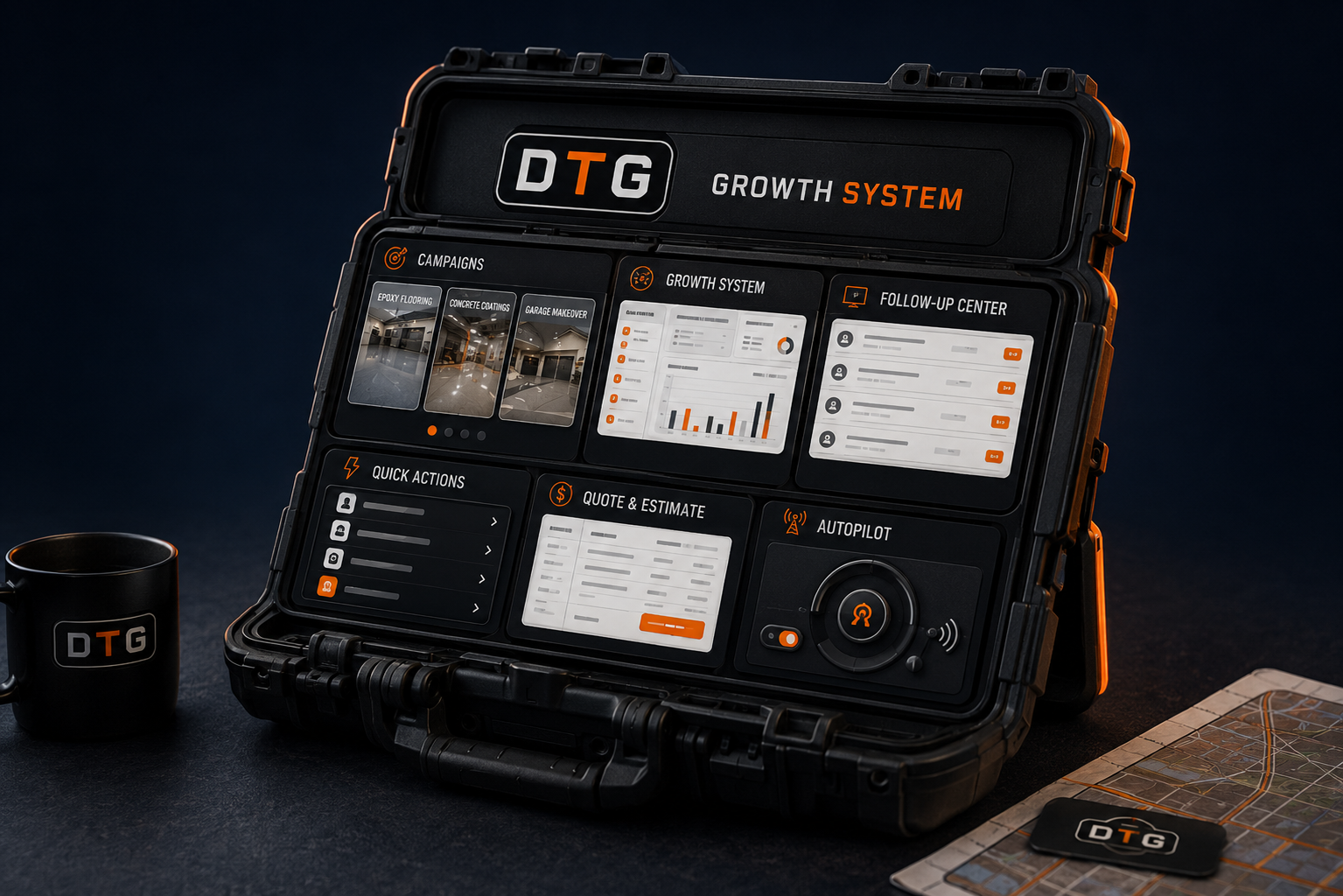
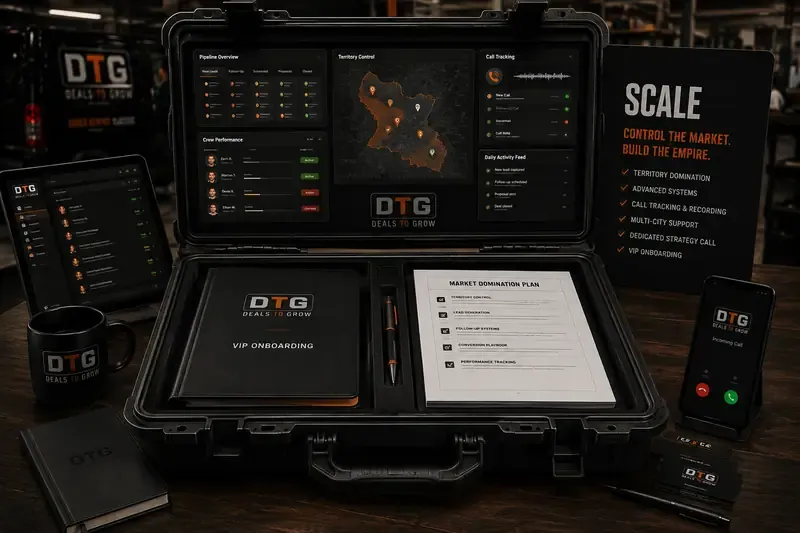
DTG growth-system kit case with campaign, follow-up, and estimate panels

The DTG System

Installed in your business and wired to your number, your CRM, your market. No contracts — and if you add the Authority Website, it's yours forever, even if you cancel.

Straightforward Pricing

One System. Three Tiers.

Plans run $1,500–$3,500 a month. The $2,000 Authority Website is an optional add-on — built once, yours forever, even if you cancel. No contracts.

Launch01
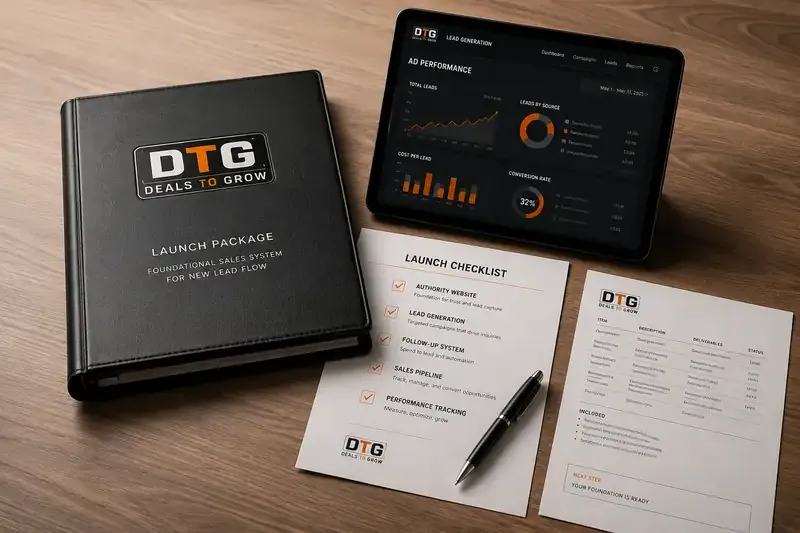
Launch package — the starter install kit
$1,500/mo
Optional: $2,000 Authority Website (recommended)
For solo operators running on word of mouth

End the feast-or-famine. Get your phone ringing on demand.

  • MetaMeta Ads
  • Ad Creatives — Static + Carousel
  • CRM + Ad Sync — your own or KaChing (recommended)
  • Email + SMS Automations — Basic
  • Exclusive Territory
  • Weekly Updates + Monthly Report
  • Google Ads + LSA
  • AI Receptionist
Check Availability Explore Launch ›
No Contracts · Cancel Anytime
Scale03
Scale package — built to dominate a market
$3,500/mo
Optional: $2,000 Authority Website (recommended)
For established crews ready to dominate their market

Stand out. Get booked weeks in advance.

  • Everything in Grow
  • Ad Creatives — + Video
  • Email + SMS — Full + Reactivation
  • Email Campaigns — 2 / month
  • Reputation Management
  • Social Media Management
  • Merchandise Design
Check Availability Explore Scale ›
No Contracts · Cancel Anytime
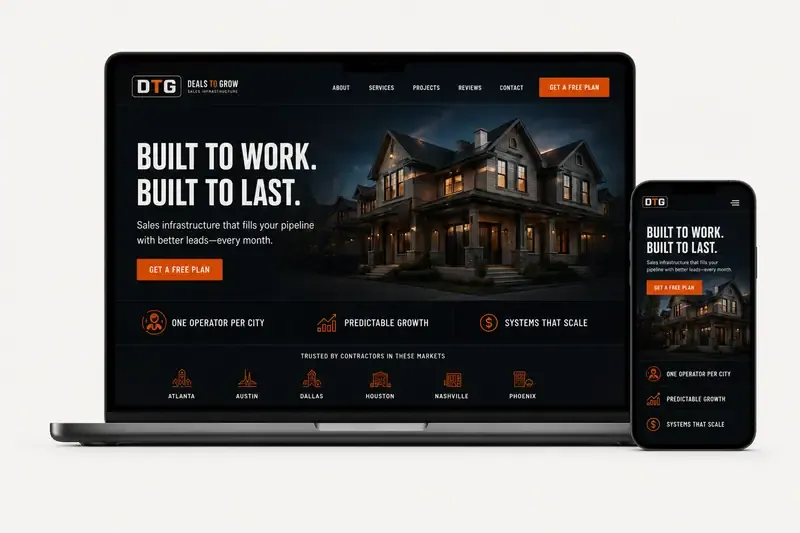
The DTG authority website mockup — a high-converting contractor site built to rank and capture leads
The Foundation · One-Time Build
Authority Website $2,000 one-time

A high-converting website built to rank in your territory, capture leads 24/7, and build trust before the phone rings. A recommended one-time add-on ($2,000) — not bundled into your plan. Built once — yours forever, no matter your plan.

Recommended add-on Yours to keep Built to rank locally

Ad spend is separate, paid straight to Meta and Google — never marked up. Compare full plans ›

Operator Profiles

Who DTG Works Best For.

Three profiles cover nearly every epoxy operator we sign. Find yours below — it sets where you start on the 12-month path from launch to scale.

Solo operator working hands-on in the field
OP·01Starts At Launch

The Solo Operator

Great work, full truck — and every job still comes from word of mouth.

  • On the tools all day, with nobody working the pipeline behind you.
  • Feast-or-famine months: booked solid, then quiet with nothing lined up.
  • You want the phone ringing on demand — without buying shared leads.
Launch — $1,500/mo
Growing contractor crew at a job site
OP·02Starts At Grow

The Growing Crew

The reviews are strong. The pipeline isn’t.

  • A crew and real reviews, but lead flow that swings month to month.
  • Calls get missed on the job — you’re ready for Google Ads + LSA and the AI Receptionist to catch them.
  • You want a pipeline you own, steady enough to plan hires around.
Grow — $2,500/mo
Established operator in command at the CRM pipeline dashboard
OP·03Starts At Scale

The Established Shop

Demand is steady. The next fight is owning the market.

  • Crews are busy; you want booked weeks ahead, at better margins.
  • You’re staffing up — sales, fulfillment, office — and the pipeline has to stay ahead of payroll.
  • You want the full machine — video creatives, reactivation, reputation — and the territory locked.
Scale — $3,500/mo

The honest line: DTG isn’t for lead-shoppers, agencies, or contractors who won’t own their ad accounts — and if another operator already holds your metro, it’s closed.

See If You’re A Fit
FAQ

Common Questions.

Q.01My ticket is on the lower end ($2–4K). Will this still work?

Yes. The system pays for itself at one to two extra installs per month — low ticket means a fast sales cycle, so payback is quick. Campaigns, qualification, and follow-up are tuned for volume at your ticket size.

Q.02I run on Meta primarily. Do I need Google?

For epoxy, Meta drives the volume and Google captures the high-intent buyers searching "epoxy flooring near me." We build and manage both — Meta on every plan, Google Ads + LSA on Grow and Scale plans.

Q.03How do you handle commercial vs. residential?

Two segmented offers, two ad campaigns, two landing flows — same backend CRM. Most operators run both: commercial is higher ticket, residential is faster volume.

Q.04Do I need to know how to run ads?

No. We run them. Or we hand the keys to your team with a 30-day onboarding. Either way, you're not learning Meta Ads Manager unless you want to.

Q.05Does the floor visualizer actually change close rates, or is it a gimmick?

It's not magic, but it works because epoxy is sold on the finish. When a buyer locks in their flake blend or metallic epoxy color before the call, they arrive already sold on the look — so the estimate is about square footage, prep, and schedule, not "what are my options." That means fewer tire-kickers and a shorter sales cycle. It's built into your landing flow on every plan.

Q.06My installs are weather- and cure-sensitive. Can the campaigns keep up?

Yes. We pace spend to your calendar and your climate — easing off when garages are too cold or humid for a clean cure, and pushing when your crews have open install days. If you offer a fast-cure polyaspartic or a one-day topcoat, we put that in the ad copy so you can book through the shoulder season. You're never paying for leads you can't install for two months.

Q.07Will shared or aggregator leads work for epoxy instead?

Rarely. A shared lead is sold to three or four coaters at once, and the buyer usually hasn't decided between a chip system, a flake floor, or a full metallic pour — so you burn quoting time educating someone who's also price-shopping your competitor. At a garage-floor ticket, a marked-up shared lead can eat your margin before the truck leaves the shop. Owning the campaign means the buyer picks their finish first and comes to you by name.

One Operator Per City. We Never Sign Your Competitor.
Epoxy Flooring · Territory Exclusivity
10Trades
1Per Metro
Check Availability
Your Market, Locked In

Claim Epoxy In Your City Before Someone Else Does.

We install one epoxy operator per metro and protect it. Once your city is taken, it's gone. See if yours is open.

2-min check · We reply within 1 business day · No obligation.

The epoxy lead-and-CRM system installed — quotes, follow-up, and scheduling running in one place