When referrals dry up, the calendar empties. Project-type campaigns and portfolio authority pages keep qualified bids coming — with an AI receptionist on Grow and Scale plans. One operator per city. Live in 5 business days.
You Don't Need More Marketing Pieces. You Need One System.
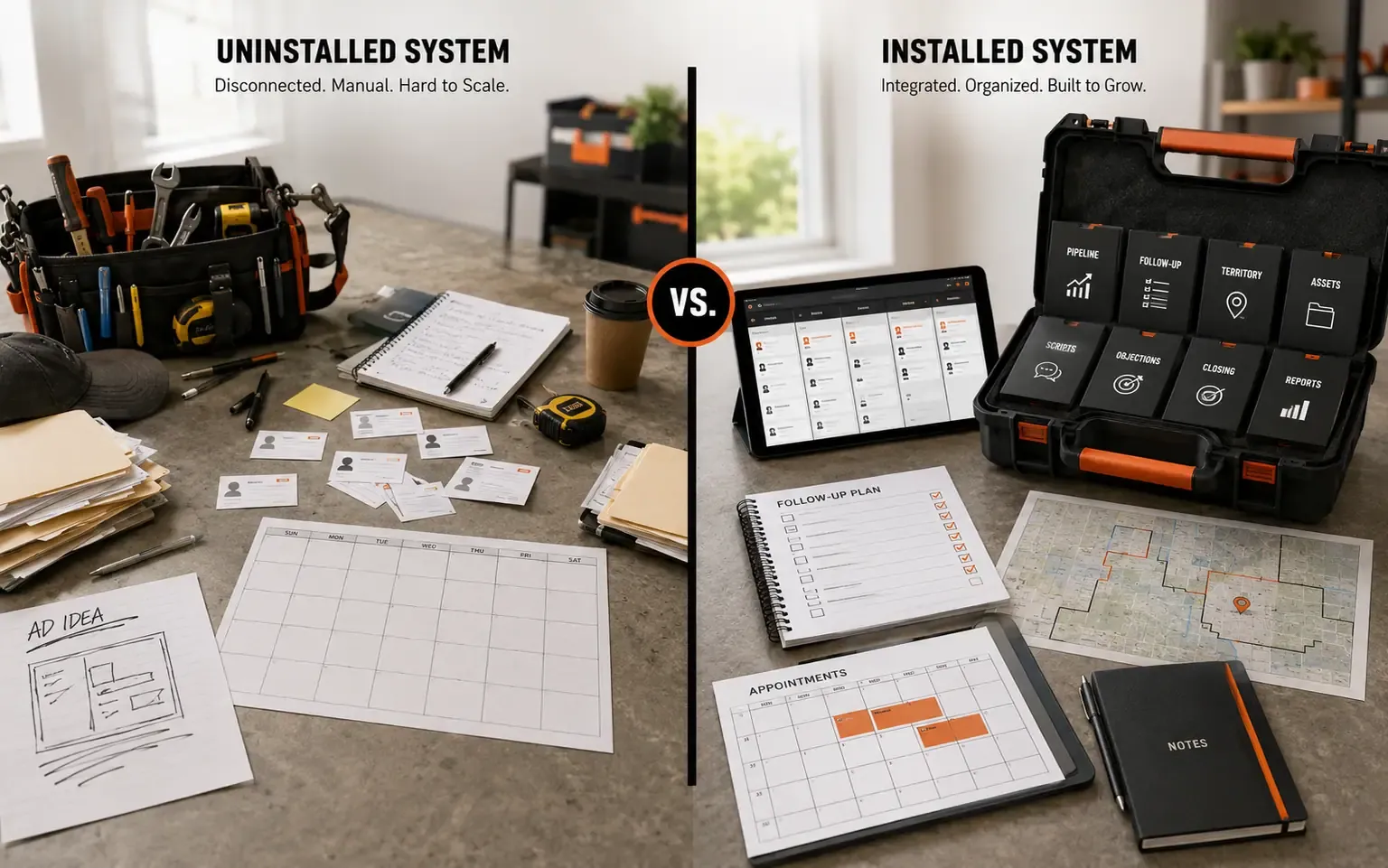
When referrals dry up, most GCs bid and pray. Random ads here, no follow-up there, leads going cold somewhere else — none of it talks to each other, and the gap between projects keeps getting longer. DTG replaces the tangle with one connected system: campaigns, qualification, booking, and follow-up wired together from day one.
The real cost of a cold pipeline isn't the empty week — it's the estimating hours you sink into bids that were never going to close. A general contractor can burn a full day on a site visit, takeoffs, and a detailed estimate for a homeowner who is still "collecting three quotes" and shopping on price alone, and that time is gone whether or not the job ever books. A funded, permit-ready project owner and a cold price-shopper can sound almost identical on a first call — so with no way to tell them apart up front, you end up subsidizing tire-kickers with the exact hours you should be billing to real work.
General contracting isn't even one business — it's several stacked under one license. A high-end custom addition and a production remodel need different messaging, different proof, and different buyers, and the ad that lands one repels the other. The cycle is long, too: 60 to 90 days from first inquiry to signed contract is normal once permits, design revisions, and subcontractor availability are in the mix. Every handoff between you, your project manager, and your subs is another spot a warm lead cools off. A drawer full of disconnected tools can't hold a deal together across that gap — one system that keeps following up is the only thing that reliably does.
One pipeline instead of five disconnected tools
Every lead captured, qualified, and followed up automatically
One report that shows cost per won bid, not vanity clicks
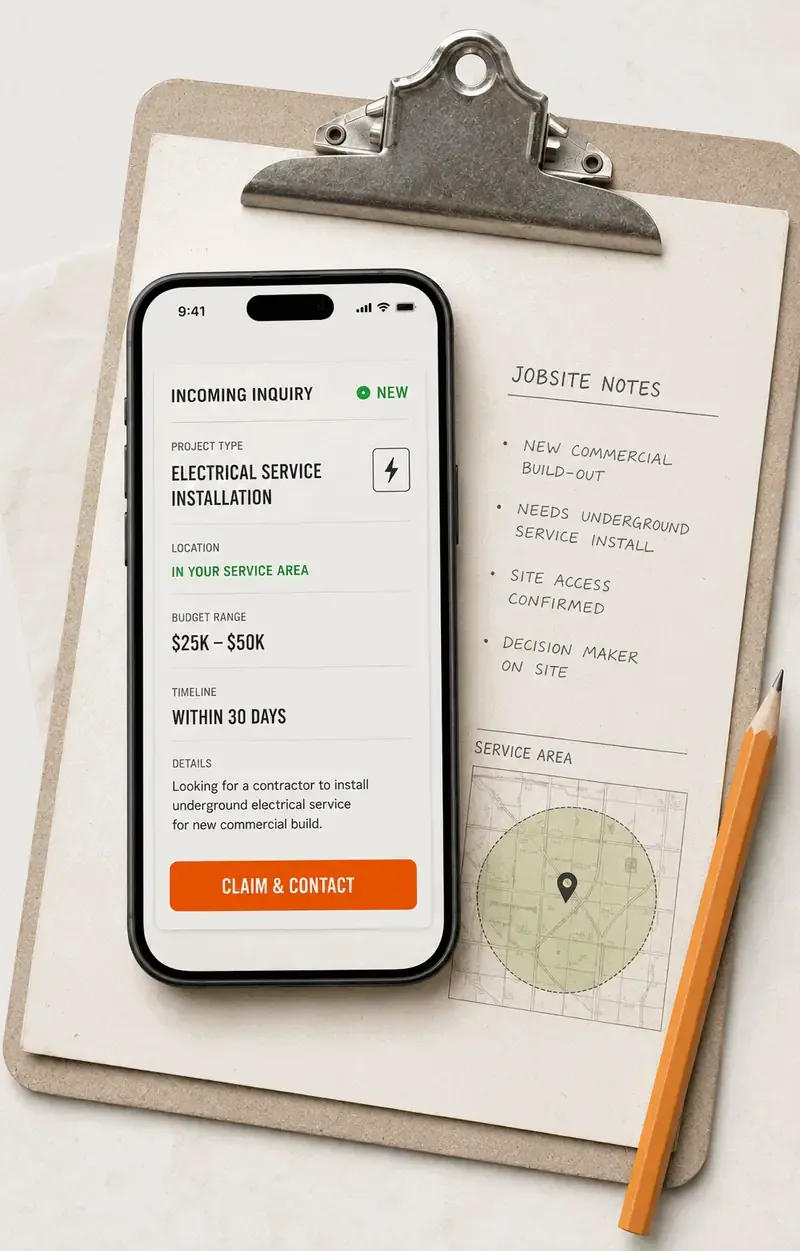
General contractors burn hours — and real estimating dollars — chasing bids that were dead on arrival. DTG flips the order of operations: qualify the project first, then spend your day on it. Every inquiry is scored for project type, budget, scope, and timeline before it reaches you, so a funded addition earns a callback and a fishing-for-a-number price-shopper gets an automated follow-up instead of your Saturday. Behind that, a portfolio and authority pages do the trust-building that used to happen on the phone — finished remodels, permits pulled, real reviews, a clear point of view — so by the time you talk scope, the owner already believes you're the one who should sign the contract.
Project-type campaigns for remodels, additions, and new builds — each with its own message and proof
Portfolio and authority pages that carry the estimate: finished scope, permits pulled, punch-list-clean work
Multi-step qualification for budget, scope, and timeline — cold price-shoppers never reach your calendar
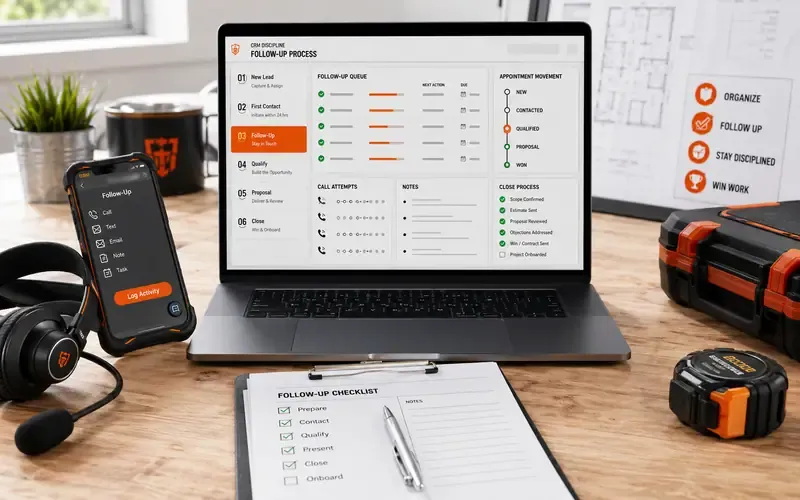
Automated follow-up that works the full 60–90 day cycle, keeping design-build and custom deals warm through every revision and draw
The Economics
The Math Behind One Qualified Bid.
General contracting runs on big, infrequent tickets. A single project can land anywhere from roughly $30K for a focused remodel to $250K and well past it for a custom addition or a design-build whole-home — so one won bid can outweigh a month of small jobs, and one wasted estimate can cost you a week you never get back. At that ticket size, chasing lead volume is the wrong instinct. Lead quality is the whole game. Ten funded, permit-ready inquiries are worth more than a hundred people fishing for a ballpark number they'll take straight to your competitor. The margin on one signed remodel can fund months of marketing; the hours lost to a dead bid just evaporate.
Cost per lead reflects that reality. For general contractor work, CPL in most metros typically runs somewhere between $60 and $200 — higher than a service trade, because the qualified buyers are fewer and the scope is larger. Pair that with a 60 to 90 day cycle and the entire job becomes filtering hard: qualify for budget, scope, and timeline before a truck ever rolls, so you only produce estimates for projects you can realistically land. The operators who win aren't bidding everything — they stopped handing out free estimates to tire-kickers and poured those hours into the two or three real ones. The same discipline pays off on focused scopes too, whether that's a kitchen remodel or a bath remodel running as one line inside a larger project.
This is exactly where generic shared and aggregator leads fall apart for general contractors. A shared lead is sold to three or four contractors at once, so before anyone has seen the plans you're already in a price war on a job whose scope isn't defined — and vague, unqualified inquiries are the ones that curdle into endless change orders, ghosted follow-ups, and estimates that never convert. Definition up front is what keeps scope creep and surprise change orders from eating the job later. Owning the system changes the math on both ends: the lead is yours alone, generated under your name and qualified for the scope you actually want, so a subcontractor-heavy new build and a single-trade roofing replacement get routed and messaged differently instead of dumped into one inbox and answered with the same generic reply.
Qualify for budget, scope, and timeline before a truck rolls
One owned lead — never resold to three competitors bidding the same job
Follow-up that survives the full 60–90 day cycle, from estimate to punch list
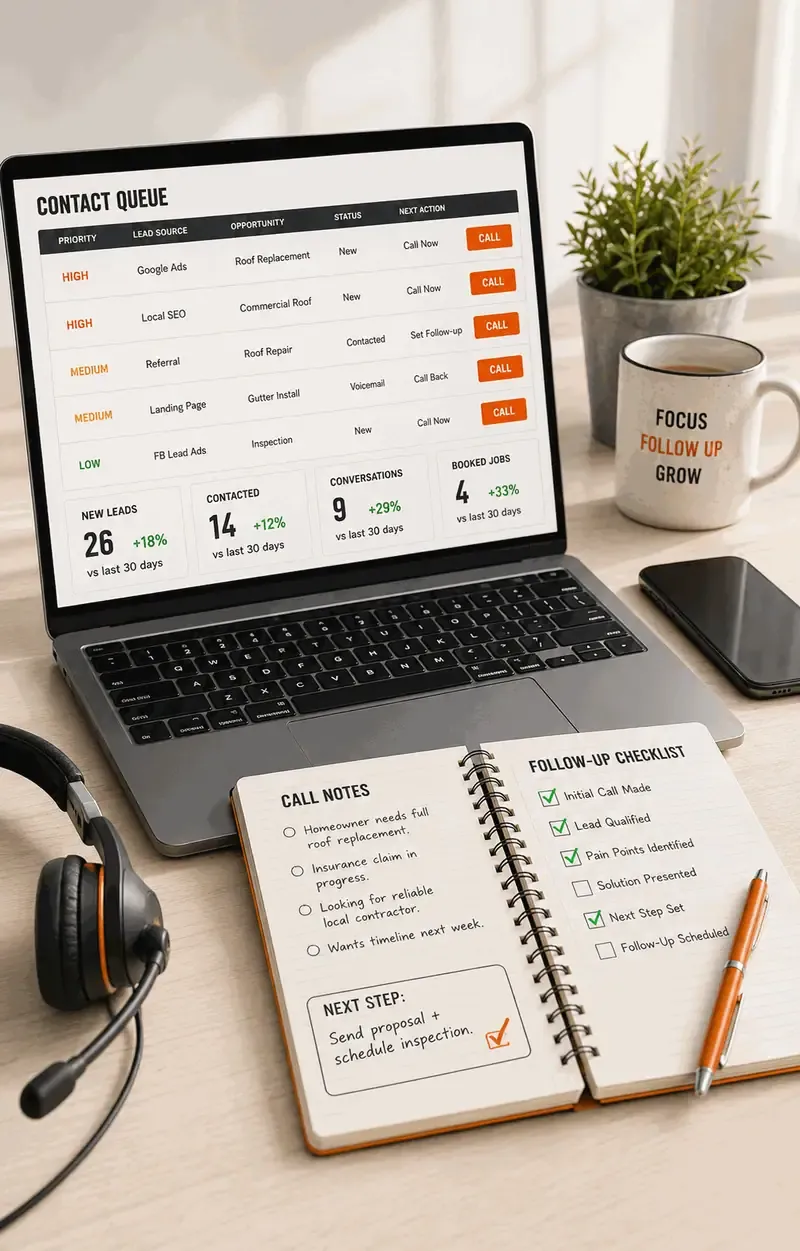
Speed compounds all of it. Answering a lead in seconds instead of days, then following up automatically across the full cycle, is often the difference between signing the draw schedule and losing the project to whoever called back first. That's the quiet math behind a healthy pipeline: fewer, better bids, worked faster, with a project manager's discipline applied to every follow-up. Every hour you claw back from dead-end estimating is an hour on a real bid. When you're weighing what that's worth against a month of ad spend, our packages and pricing lay the numbers out plainly.
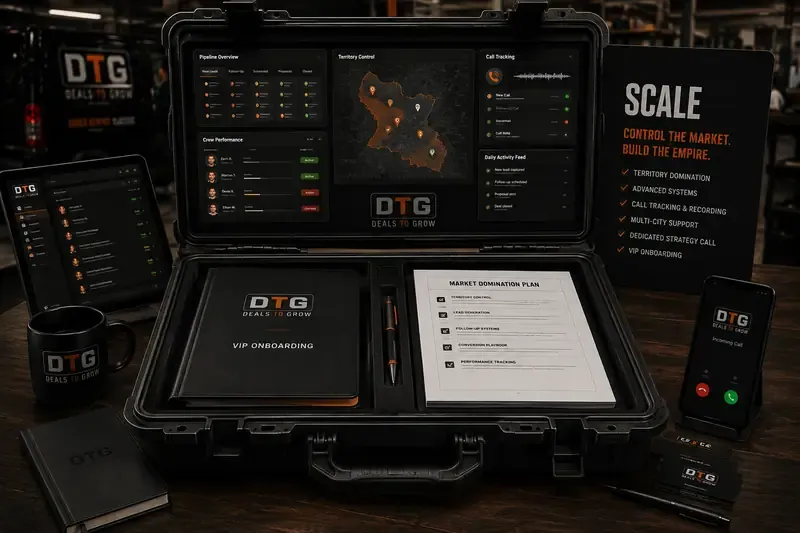
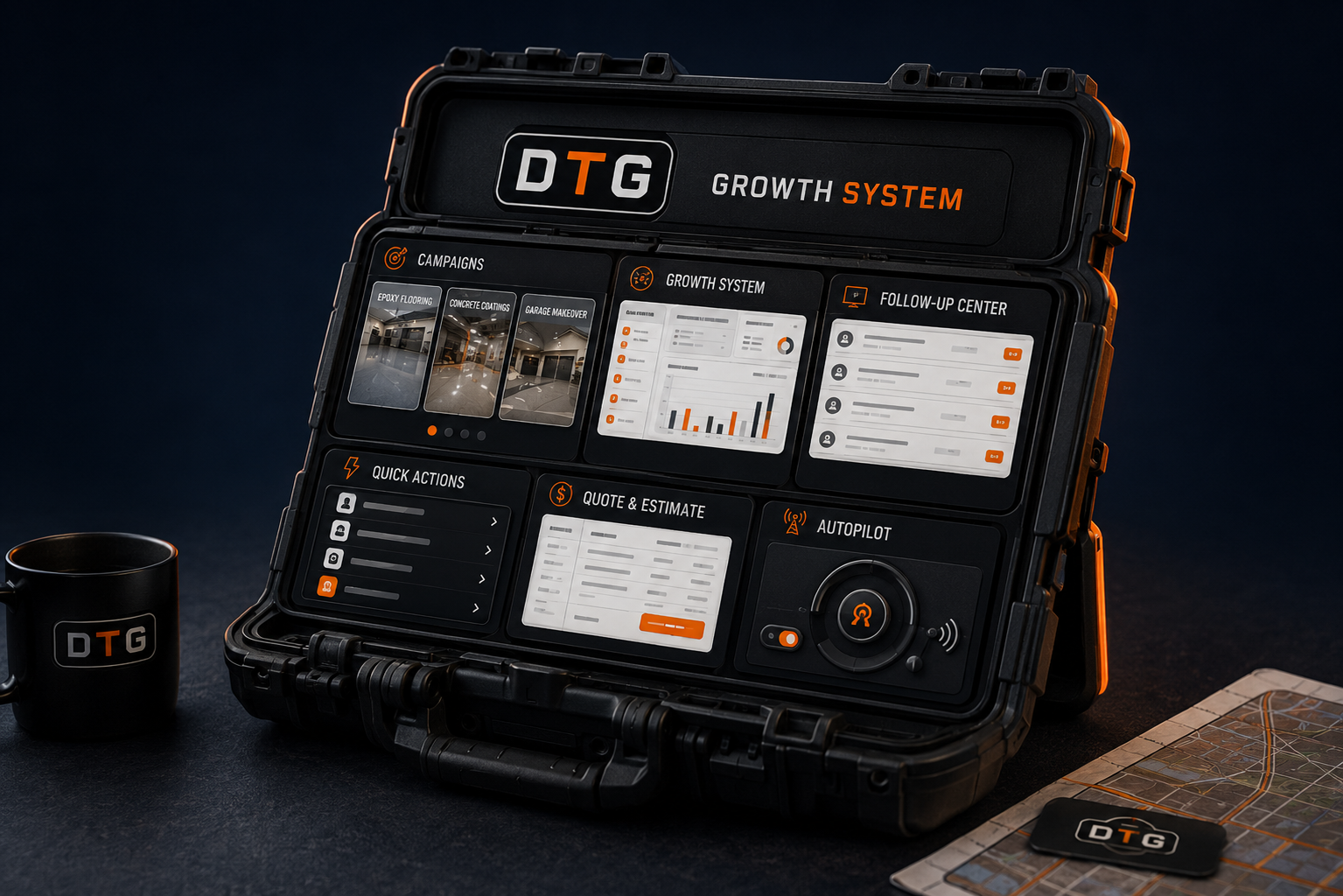
The complete DTG growth system — built, connected, and managed for you. One install kit, nine systems wired into one machine you own. No piecing it together.
01
Meta Ads
Paid campaigns that pull high-intent buyers in your market.
02
Google Ads + LSA
Capture high-intent “near me” search the moment they look.
Grow and Scale plans.
03
AI Receptionist
Answers every lead in under 12 seconds, 24/7.
Grow and Scale plans.
04
CRM (KaChing)
Every lead, estimate, and job in one pipeline you own.
05
Email + SMS Automations
Confirmation, missed-call, quote booking, follow-up, and review & referral requests — automated end to end.
06
Reporting Dashboards
CPL, booked jobs, and revenue — tracked live.
07
Reputation Management
More 5-star reviews, on autopilot.
Scale plan.
08
Social Media Management
Before/after proof your market sees.
Scale plan.
09
Authority Website
Optional add-on — built once, yours to keep.
Three Project Types. One System.
Remodels. New Builds. Multifamily.
The DTG system is calibrated for the ways GC work gets bought — campaigns, landing flows, and qualification built for each project type.
Residential Remodels
Kitchens, baths, basements, whole-home — every request arrives budget-qualified before you spend an hour on it.
New Builds & Additions
Bigger tickets, longer cycles. Nurture and retargeting keep the deal alive between touches — so it doesn't die mid-cycle.
Commercial & Multifamily
A separate funnel with its own qualification for commercial and multifamily work — built only if you do it.
Why Others Fall Short
Agency. Freelancer. In-House. vs. Owning The System.
Every alternative leaves a gap. Here is what operators run into before they switch to DTG.
The Agency
You pay a retainer for deliverables, not outcomes. Campaigns pause when the contract does — and you never own the data or the pipeline they built.
The Freelancer
One person, one channel, no system. Strong on ads, weak on follow-up — and when they're unavailable, your pipeline stalls with them.
In-House
You hire a marketer, train them for six months, then they leave. The institutional knowledge walks out the door — and you start over at full salary cost.
The DTG System
Installed in your business and wired to your number, your CRM, your market. No contracts — and if you add the Authority Website, it's yours forever, even if you cancel.
Straightforward Pricing
One System. Three Tiers.
Plans run $1,500–$3,500 a month. The $2,000 Authority Website is an optional add-on — built once, yours forever, even if you cancel. No contracts.
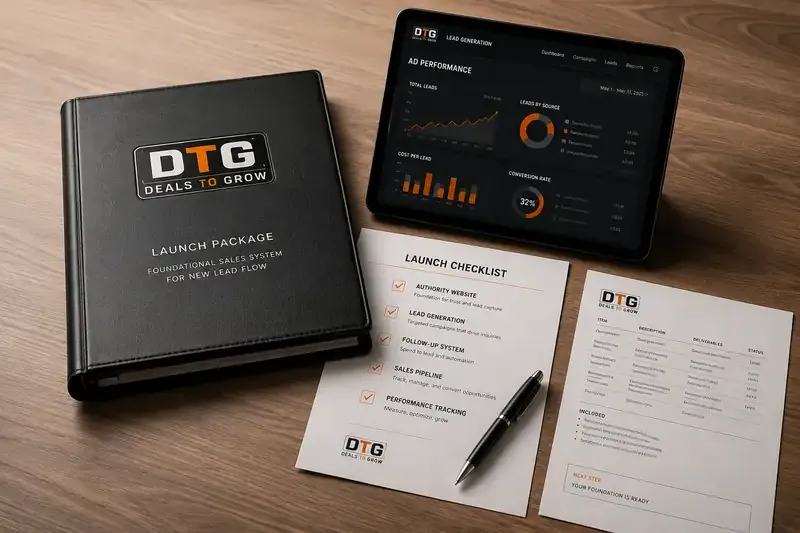
Launch01
$1,500/mo
Optional: $2,000 Authority Website (recommended)
For solo operators running on word of mouth
End the feast-or-famine. Get your phone ringing on demand.
A high-converting website built to rank in your territory, capture leads 24/7, and build trust before the phone rings. A recommended one-time add-on ($2,000) — not bundled into your plan. Built once — yours forever, no matter your plan.
Recommended add-onYours to keepBuilt to rank locally
The honest line: DTG isn’t for lead-shoppers, agencies, or contractors who won’t own their ad accounts — and if another operator already holds your metro, it’s closed.
It's built for that. Your nurture sequence and retargeting do the work during the silence, and the authority pages build trust between touches — so deals stop dying mid-cycle.
Q.02I do high-end remodels, not production work.
Good — that's the sweet spot. The system is calibrated for premium positioning: editorial portfolio, design-forward authority pages, no race-to-the-bottom angles.
Q.03Will this fill my calendar with tire-kicker bids?
No — that's the point. Multi-step qualification screens for project type, budget, and timeline before anything reaches your calendar, and automated follow-up handles the maybes. You bid the projects worth bidding.
Q.04Do you handle subcontractors / project management?
No. We build sales infrastructure — the system that closes the job. Project execution stays with you and your existing PM tools.
Q.05Do you generate commercial and multifamily leads, or just residential remodels?
Both — if you run both. We build a separate funnel with its own qualification for commercial and multifamily work, because the scope, the decision-makers, and the draw schedule look nothing like a residential remodel. Those inquiries get scored on their own terms instead of against a kitchen bid. If you only run residential additions and remodels, we skip it and put the whole budget where your jobs actually are.
Q.06What does a qualified general contractor lead cost?
It varies by market and project type, but cost per lead for general contractor work typically runs somewhere between $60 and $200 in most metros — higher than a quick service call, because the tickets are bigger and the qualified buyers are fewer. The number that actually matters isn't CPL, though. It's cost per bid you win. Qualification filters for budget, scope, and timeline up front, so you stop paying to produce free estimates for price-shoppers and only work the projects you can realistically land.
Q.07How is this different from buying shared bids from a lead aggregator?
A lead aggregator sells the same inquiry to three or four contractors at once, so every 'lead' is a race to the lowest bid before anyone has seen the plans. Ours are generated on your own ad accounts, answered under your name, and qualified for the exact scope you want — and no competitor gets the same contact. You own the pipeline instead of renting it back one shared lead at a time.
One Operator Per City. We Never Sign Your Competitor.







 Meta Ads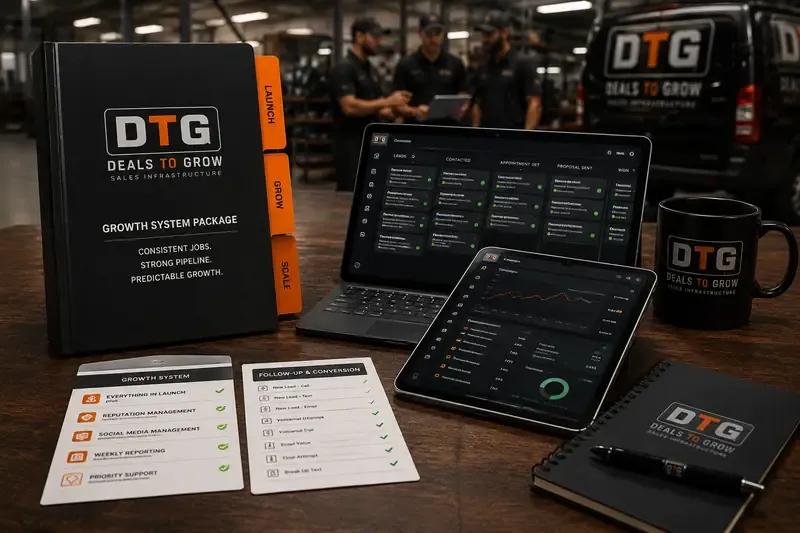
 Google Ads + LSA