The Complete Pool Growth System. Installed For You.
Pool buyers think all winter, then every builder's phone rings at once in spring. Early-season demand campaigns and portfolio showcase pages get you booked first — with an AI receptionist on Grow and Scale plans. One operator per city. Live in 5 business days.
2-min check · We reply within 1 business day · No obligation.
Seasonal Lead SurgesNew Pool + RenovationDesign Portfolio
Live in 5 business days
One operator per city
You own every account & lead
The Problem
You Don't Need More Marketing Pieces. You Need One System.
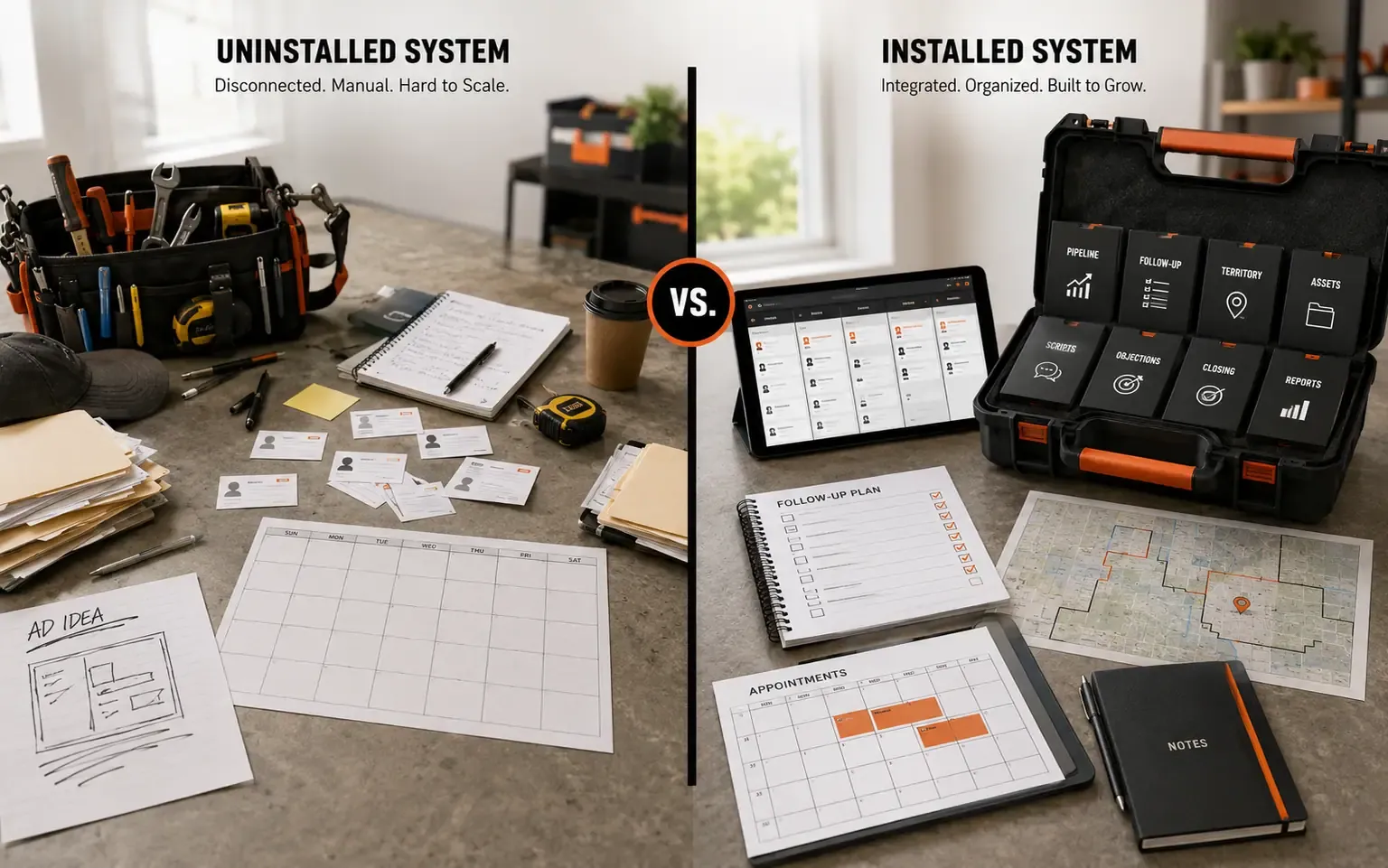
A pool buyer thinks for months — then everyone calls in the same spring rush. Social ads here, a lead vendor there, a referral network somewhere else — none of it talks to each other, and the design request from February goes cold before the rush even hits. DTG replaces the tangle with one connected system: campaigns, qualification, booking, and follow-up wired together from day one.
Pool demand doesn't trickle in — it detonates. Homeowners spend the cold months scrolling backyard photos, pricing a gunite build against a fiberglass shell, and slowly talking themselves into the project. Then, the week the weather finally breaks, every one of them calls at once. That compressed spring rush is the whole ballgame: miss the winter booking window and you're not down a couple of jobs, you're fighting over the scraps of a season that's already been sold to whoever showed up first. The builders who run a full summer aren't the ones with the flashiest crew or the lowest price — they're the ones who were in front of those buyers back in January, while the competition was still winterizing equipment and waiting for the phone to ring on its own.
Then there's the length of the sale. A new build is a six-month decision — design, permits, excavation, the shell, plaster, coping, waterline tile, and decking — and a lead that goes quiet in week two is a $60K job quietly hiring someone else. Without a nurture system running underneath every inquiry, that follow-up simply never happens. And the money left on the table doesn't stop at the pool itself: the spa, the water feature, the outdoor kitchen, the surrounding hardscape, and the recurring service and maintenance contract are all revenue most builders never chase on purpose — the kind of full-backyard scope that operators who also run landscaping or general contracting divisions already know how to capture.
One pipeline instead of five disconnected tools
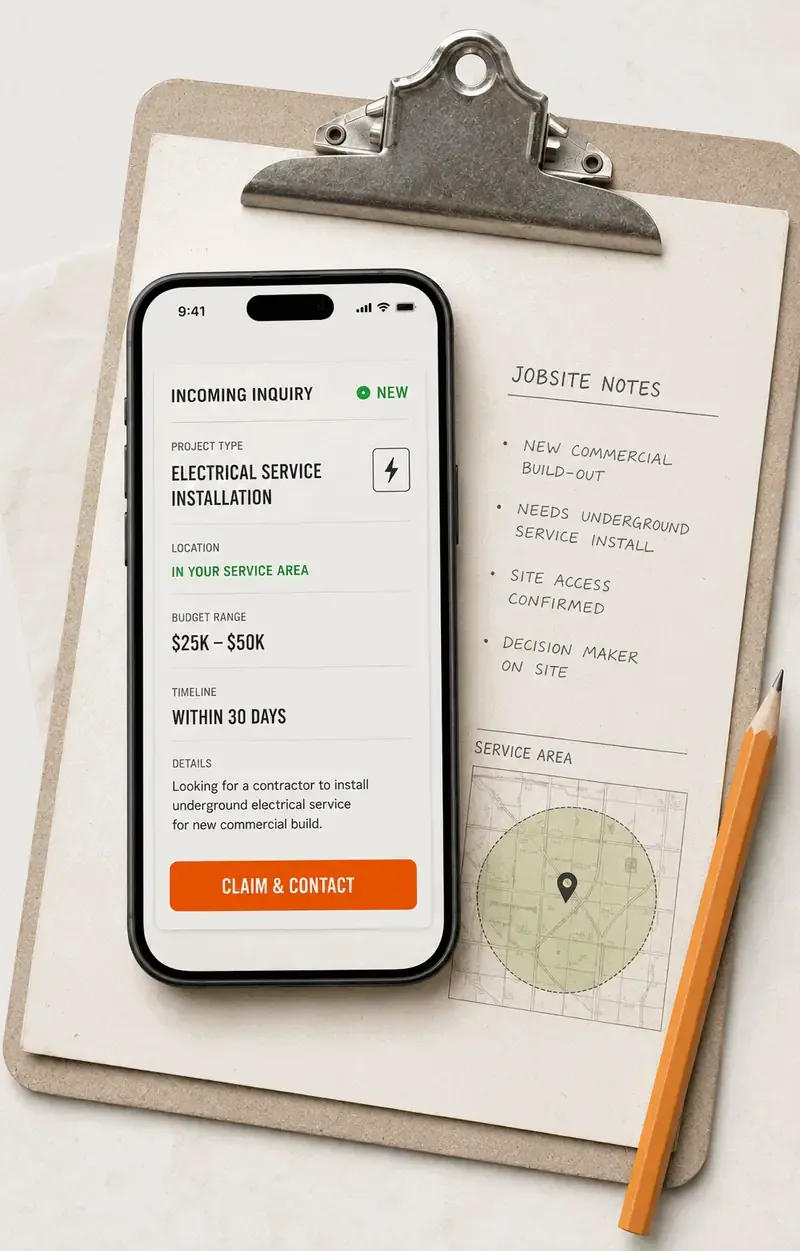
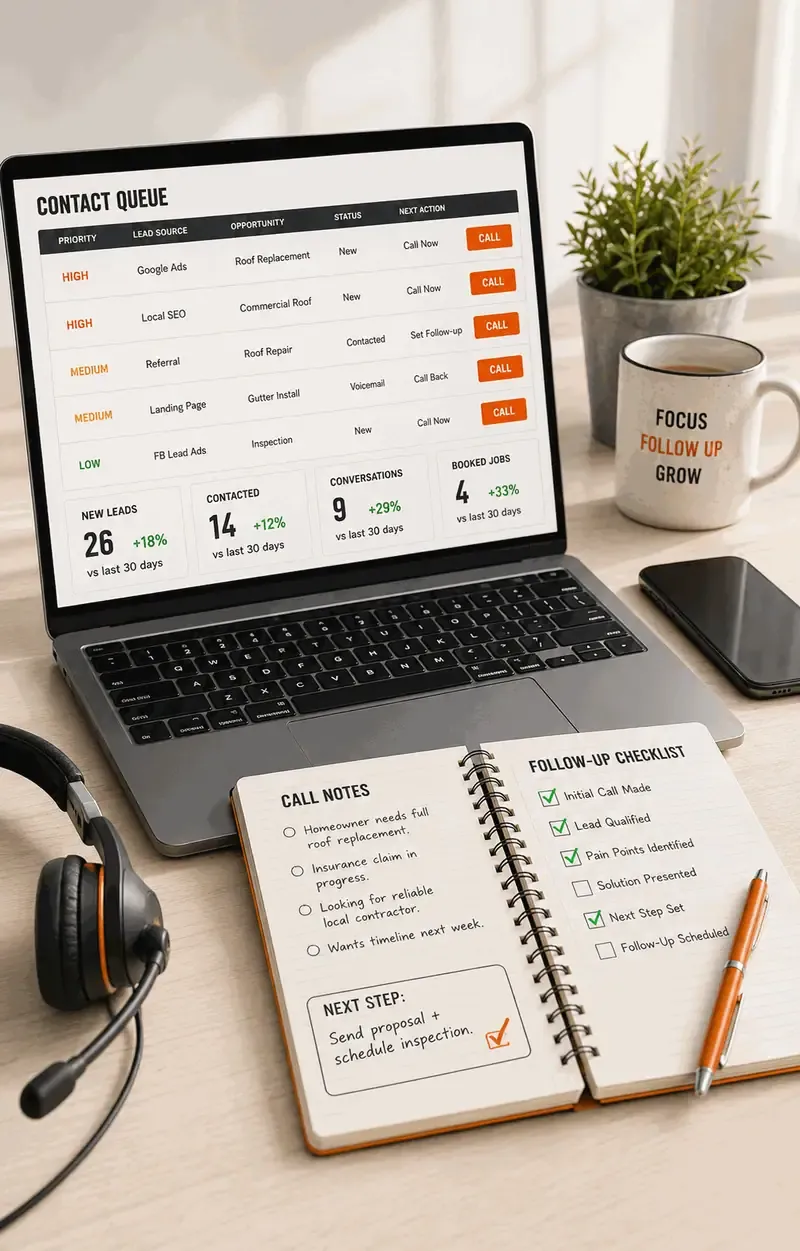
Every lead captured, qualified, and followed up automatically
One report that shows cost per booked estimate, not vanity clicks
The Pool Angle
Pool Buyers Start Dreaming In Winter. Be Booked Before Summer.
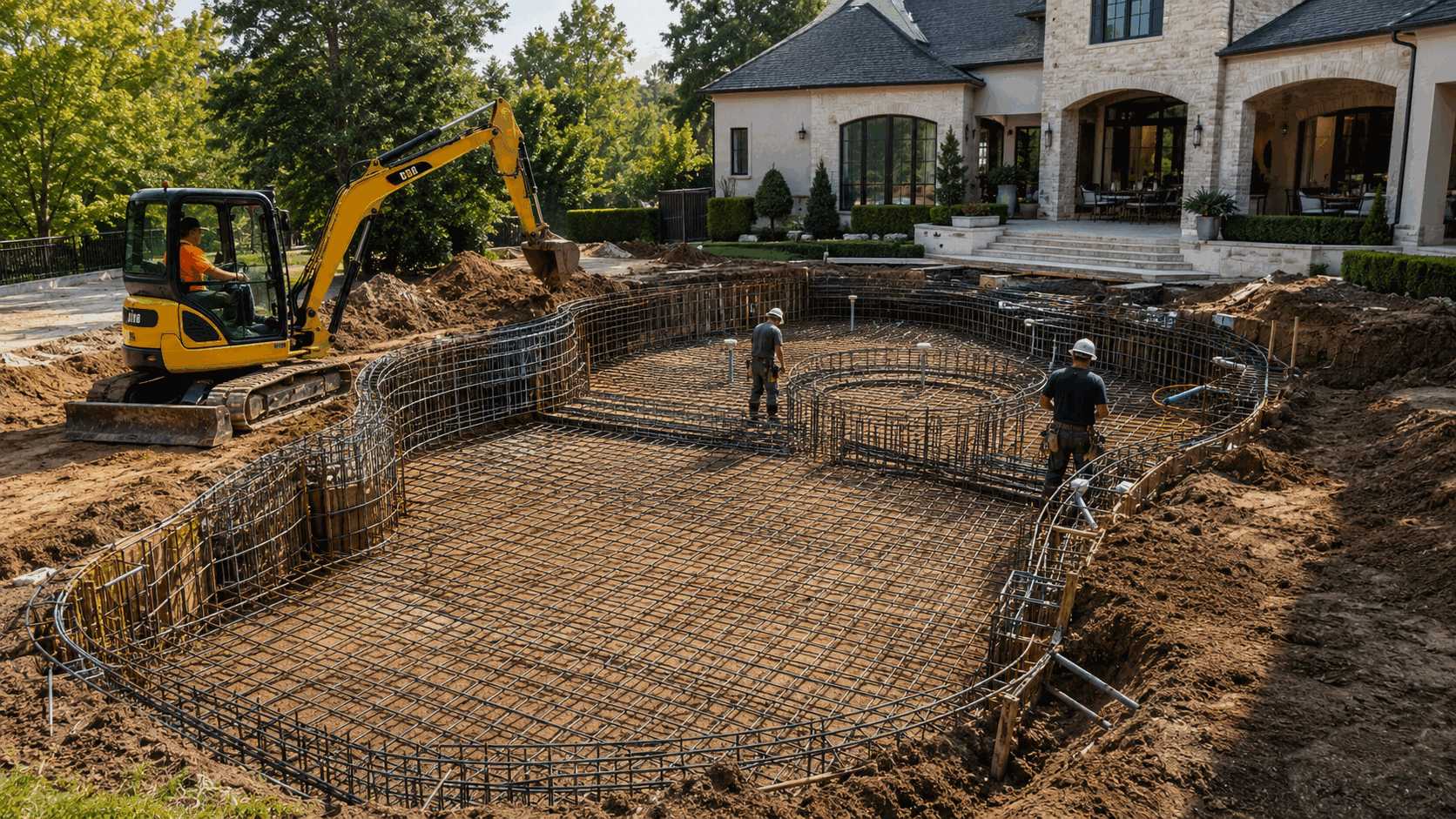
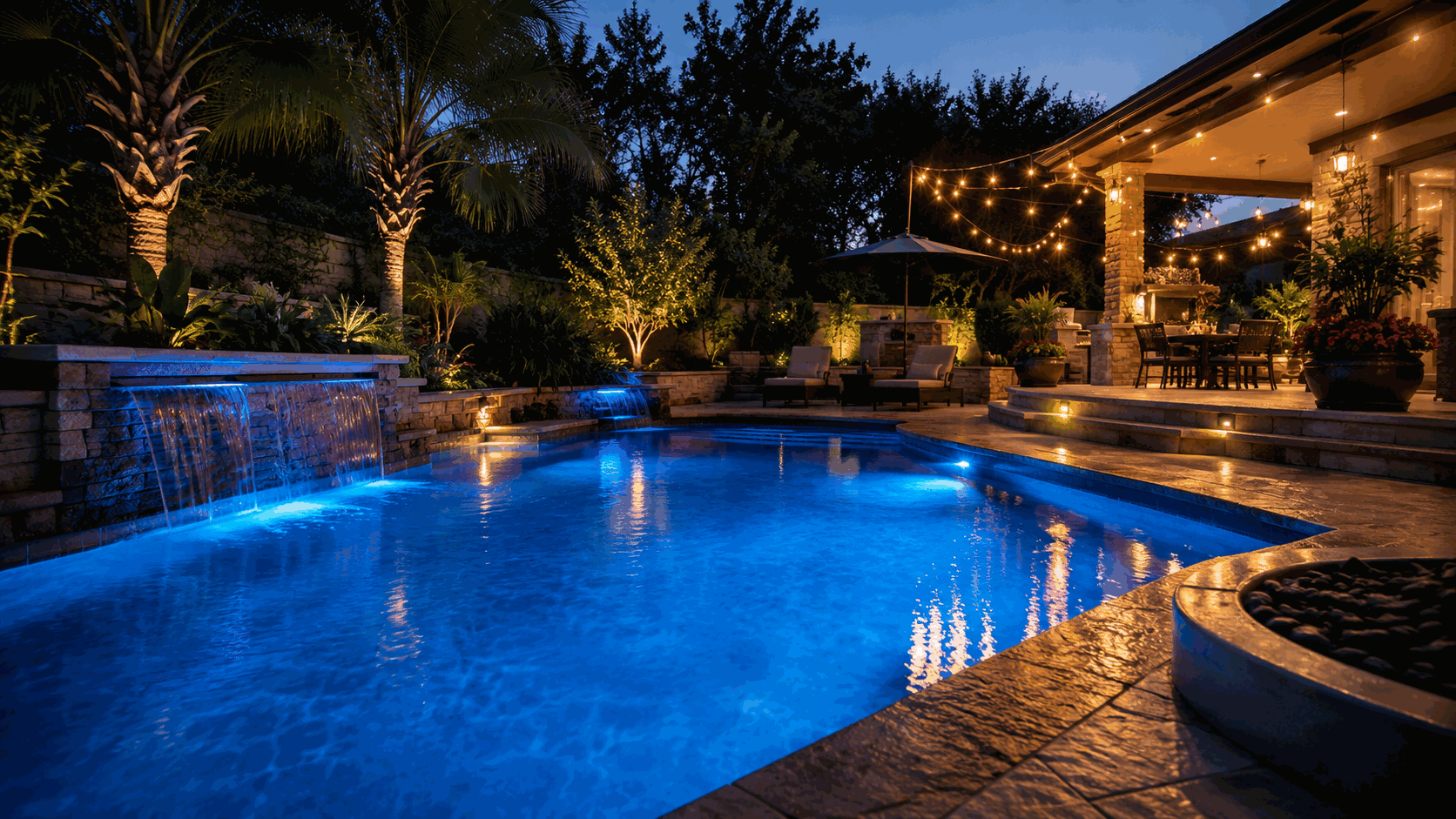
A new pool is a $50K–$100K decision that starts months before the first warm day. By the time a homeowner is standing in the backyard picturing a gunite shell, a raised spa, and a fire-and-water feature spilling onto fresh decking, they've already spent the winter deciding — they're just waiting for a builder to make it real. DTG launches your demand campaigns in January and February, while competitors are still winterizing and hoping spring is kind, so design consultations land on your calendar early and your build calendar is full before peak season even arrives. Own the winter conversation and you own the summer schedule — and your crew stays booked while everyone else is still bidding.
Early-season demand campaigns that launch in January and February — not April, when the rush is already gone
New-build, renovation, and resurface targeting split by buyer intent, not lumped into one ad
Portfolio landing pages — gunite, fiberglass, waterline tile, water features — that turn winter browsers into named design requests
Spa, coping, decking, and outdoor-kitchen upgrades framed as one project, so the average ticket climbs
Fully Installed For You
Nine Systems. One Install.
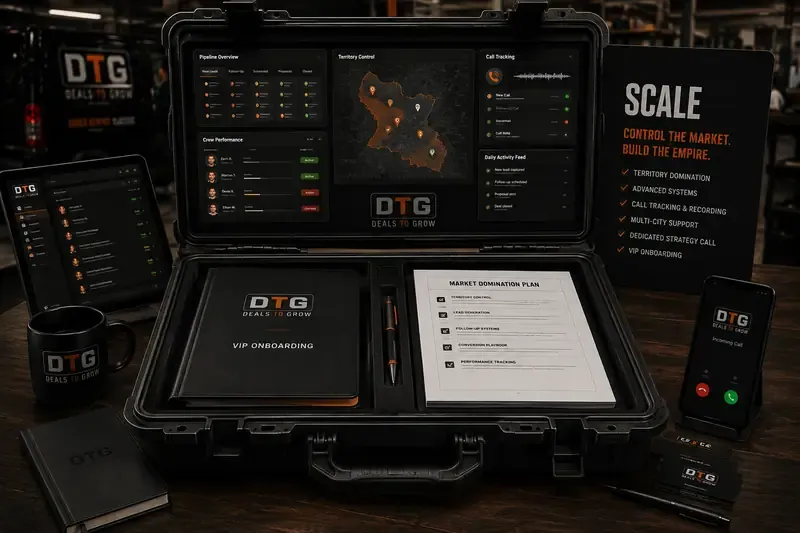
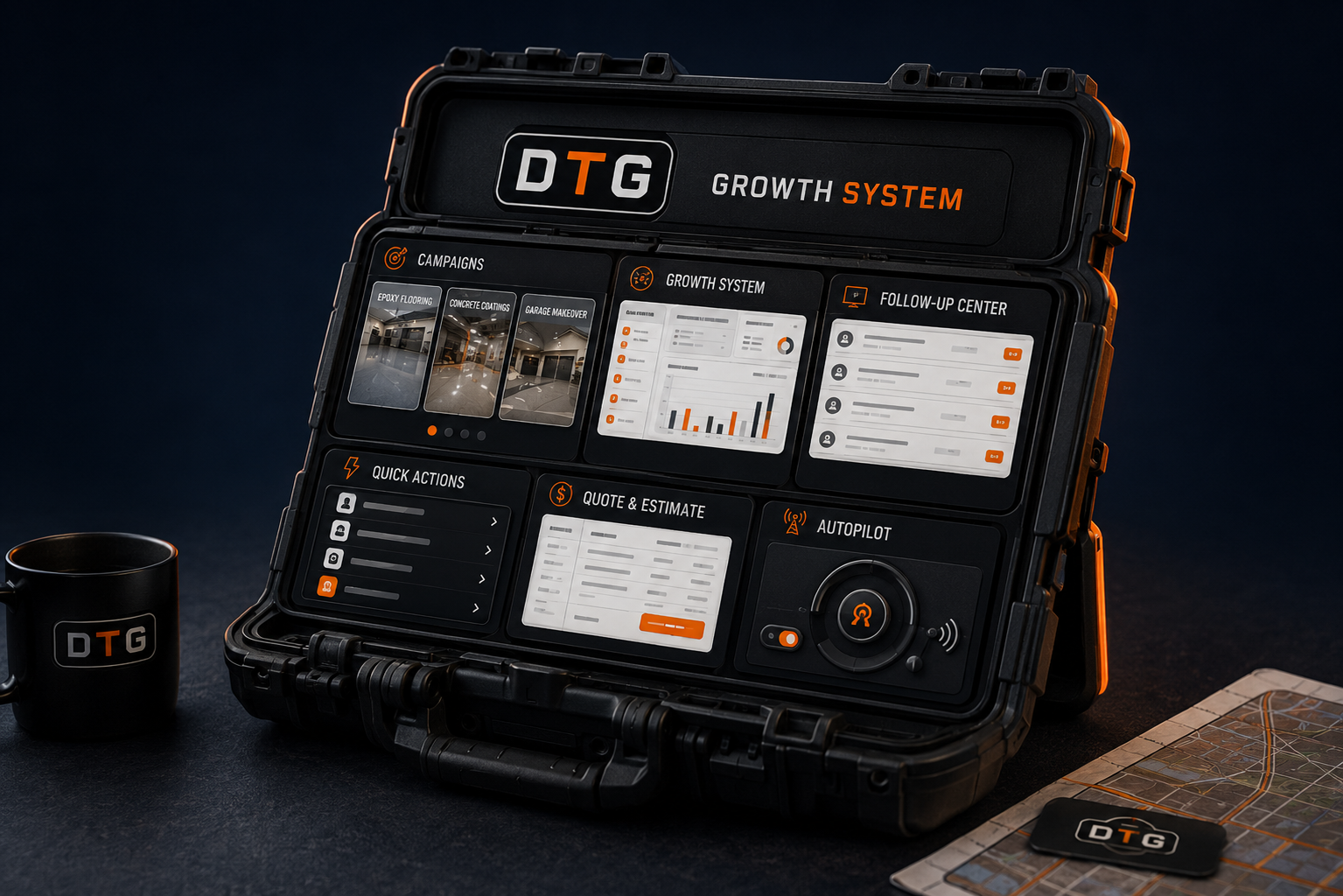
The complete DTG growth system — built, connected, and managed for you. One install kit, nine systems wired into one machine you own. No piecing it together.
01
Meta Ads
Paid campaigns that pull high-intent buyers in your market.
02
Google Ads + LSA
Capture high-intent “near me” search the moment they look.
Grow and Scale plans.
03
AI Receptionist
Answers every lead in under 12 seconds, 24/7.
Grow and Scale plans.
04
CRM (KaChing)
Every lead, estimate, and job in one pipeline you own.
05
Email + SMS Automations
Confirmation, missed-call, quote booking, follow-up, and review & referral requests — automated end to end.
06
Reporting Dashboards
CPL, booked jobs, and revenue — tracked live.
07
Reputation Management
More 5-star reviews, on autopilot.
Scale plan.
08
Social Media Management
Before/after proof your market sees.
Scale plan.
09
Authority Website
Optional add-on — built once, yours to keep.
Three Job Types. One System.
New Builds. Renovation. Outdoor Living.
The DTG system is calibrated for the ways pool and outdoor work gets bought — campaigns, landing flows, and follow-up sequences built for each buyer type.
New Pools & Spas
The $50K–$100K decision this system is built for — portfolio landing pages turn winter dreamers into named design requests.
Renovation & Upgrades
Resurfacing, lighting, water features, equipment — a faster cycle that keeps crews busy between full builds.
Hardscape & Outdoor Living
Patios, outdoor kitchens, and full backyard projects run as their own funnel — separate landing flow, shared CRM.
The Economics
What A Pool Lead Is Actually Worth.
A pool lead behaves nothing like a $300 service call. The ticket is enormous, the decision is slow, and what it costs to book one reflects both. Here's the honest math — typical for the trade, not a promise for your market.
A new build typically runs somewhere between $40K and $100K and up, depending on whether it's a modest fiberglass drop-in or a full gunite project with a raised spa, custom coping, waterline tile, and a water feature. Because the ticket is that high and the sales cycle that long, cost per lead in most pool markets tends to land in the $80–$250 range — well above what a plumber or an HVAC tech would pay for a call, and completely rational once you run the arithmetic. Those numbers move with your metro, your competition, and how much of the season is left, so treat them as typical, not a quote.
And the ticket rarely ends at the pool. The same buyer who signs for a gunite shell is a live prospect for decking, an outdoor kitchen, a spa, and the surrounding hardscape — and once the build is done, a recurring service and maintenance plan turns a one-time customer into revenue that carries your crews through the slow months. Priced right, resurface and renovation work fills the shoulder season while next winter's new-build pipeline is still warming up.
Two things decide whether that spend prints money. The first is timing: the winter booking window is what fills your entire summer build calendar, so a dollar worked in January does far more than the same dollar in June. The second is nurture. A six-month decision — design, permits, excavation, shell, plaster, decking — is won in the follow-up, not the first phone call. Most builders lose the job not to a cheaper bid but to silence, and closing that gap on a long, high-ticket decision is the actual game.
That's also why generic, shared, and aggregator leads fail for pool work specifically. A form fill sold four times over, with no context and no speed-to-lead, is worthless against a $60K decision that turns on trust and design. It's the same trap that pushes serious epoxy flooring contractors off shared-lead platforms — high ticket, long consideration, relationship-driven. Owning the system flips the math:
Speed-to-lead measured in seconds, not the hours a resold lead sits in someone's inbox
Your ads, your landing pages, your CRM — every account and lead in your name, never rented
A nurture sequence that runs the full build cycle, from first design request to final plaster
Do that and the cost that actually matters — cost per booked estimate, not cost per raw click — drops even when the price of a single lead doesn't. That's the whole premise behind our packages and pricing: you own the machine, you keep the calendar full, and one extra build pays for the system for the year.
Pay plans carry the same weight at this ticket. The pool sales commission calculator prices what a commission on a build costs out of gross profit, and it is worth running beside the decision most builders leave unwritten — whether the rep is paid at signing, at milestones, or on completion. The contractor sales commission calculator gives the cross-trade view.
Why Others Fall Short
Agency. Freelancer. In-House. vs. Owning The System.
Every alternative leaves a gap. Here is what operators run into before they switch to DTG.
The Agency
You pay a retainer for deliverables, not outcomes. Campaigns pause when the contract does — and you never own the data or the pipeline they built.
The Freelancer
One person, one channel, no system. Strong on ads, weak on follow-up — and when they're unavailable, your pipeline stalls with them.
In-House
You hire a marketer, train them for six months, then they leave. The institutional knowledge walks out the door — and you start over at full salary cost.
The DTG System
Installed in your business and wired to your number, your CRM, your market. No contracts — and if you add the Authority Website, it's yours forever, even if you cancel.
Straightforward Pricing
One System. Three Tiers.
Plans run $1,500–$3,500 a month. The $2,000 Authority Website is an optional add-on — built once, yours forever, even if you cancel. No contracts.
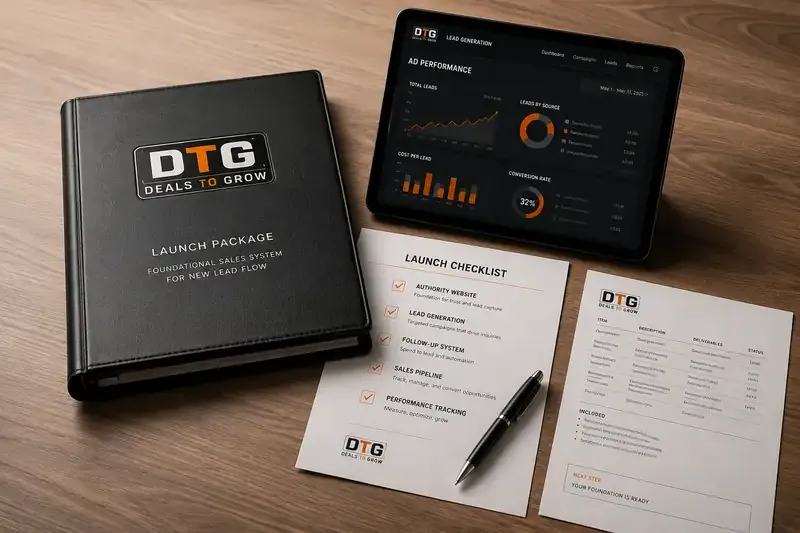
Launch01
$1,500/mo
Optional: $2,000 Authority Website (recommended)
For solo operators running on word of mouth
End the feast-or-famine. Get your phone ringing on demand.
A high-converting website built to rank in your territory, capture leads 24/7, and build trust before the phone rings. A recommended one-time add-on ($2,000) — not bundled into your plan. Built once — yours forever, no matter your plan.
Recommended add-onYours to keepBuilt to rank locally
Ad spend is separate, paid straight to Meta and Google — never marked up. Compare full plans ›
Operator Profiles
Who DTG Works Best For.
Three profiles cover nearly every pool-and-outdoor operator we sign. Find yours below — it sets where you start on the 12-month path from launch to scale.
OP·01Starts At Launch
The Solo Operator
Great work, full truck — and every job still comes from word of mouth.
On the tools all day, with nobody working the pipeline behind you.
Feast-or-famine months: booked solid, then quiet with nothing lined up.
You want the phone ringing on demand — without buying shared leads.
The honest line: DTG isn’t for lead-shoppers, agencies, or contractors who won’t own their ad accounts — and if another operator already holds your metro, it’s closed.
Yes. Campaigns, qualification, and follow-up are tuned to your ticket size, and the portfolio-led positioning supports pricing with confidence. At a $40–60K build, one extra job covers the system cost for the year.
Q.02I do hardscape / outdoor kitchens, not just pools.
We build segmented funnels. Pool and spa is one. Hardscape and outdoor living is another. Most premium operators run both — separate landing flows, shared CRM.
Q.03How do you handle the 6-month build cycle?
A nurture cadence is built into your CRM — email and SMS check-ins through design, permits, and the build itself — with a review request at handoff.
Q.04Do you support service / maintenance upsells?
Yes — we can add a post-install service-contract funnel routed through your CRM, with an email and SMS sequence at handoff. The plan pricing and billing are yours to run.
Q.05When should my campaigns start if I want a full summer?
Earlier than most builders think. The winter booking window — roughly January and February — is what fills your summer build calendar, so we launch demand campaigns while the weather is still cold and the competition is still waiting. Start in spring and you're already bidding against a season that's half sold.
Q.06Do you work for gunite, fiberglass, and vinyl builders?
Yes. The campaigns and portfolio pages are built around what you actually pour — gunite, fiberglass, or vinyl — and around your real scope, from a simple shell to full water features, coping, waterline tile, and decking. The positioning matches the buyer you want, not a generic pool pitch.
Q.07Why not just buy shared pool leads from an aggregator?
Because a lead sold to four builders at once, with no speed-to-lead and no context, rarely survives a $50K–$100K decision that turns on trust and design. You end up competing on price and chasing people who were never really yours. Owning the system means the lead is exclusive, answered in seconds, and nurtured through the whole build — a different economics entirely.
One Operator Per City. We Never Sign Your Competitor.




 Meta Ads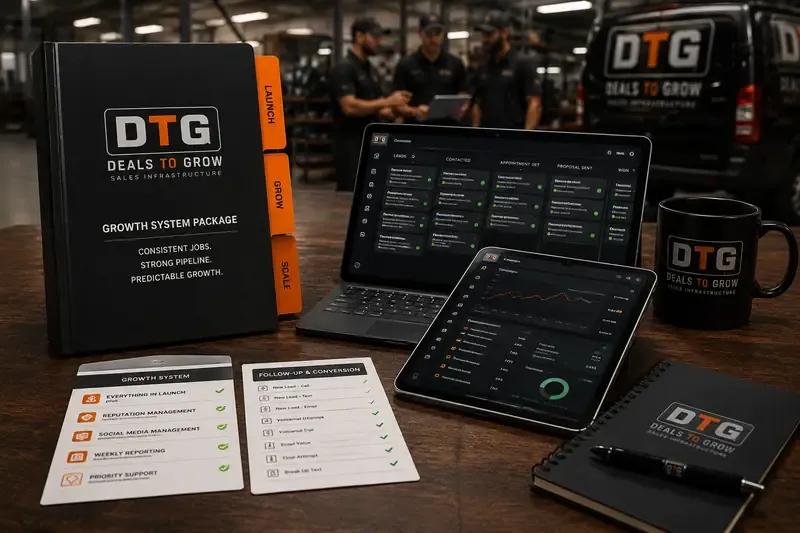
 Google Ads + LSA