Roofing Contractors

The Complete Roofing Growth System. Installed For You.

Storm season is feast then famine — and shared leads run $80 a pop. DTG installs storm-trigger campaigns, aerial damage reports, and follow-up that books inspections. One operator per city. Live in 5 business days.

2-min check · We reply within 1 business day · No obligation.

Storm Trigger Campaigns Aerial Damage Reports Qualified Inspections
  • Live in 5 business days
  • One operator per city
  • You own every account & lead
Roofing contractor checking shingles on a residential roof with DTG field kit
An uninstalled, disconnected marketing setup beside the installed DTG system
The Problem

You Don't Need More Marketing Pieces. You Need One System.

Paid ads here, a lead seller there, door-knockers working your street, and a voicemail box that fills the day hail hits. None of it talks to each other, and inspections slip through the gaps. DTG replaces the tangle with one connected system: storm-trigger campaigns, qualification, booking, and follow-up wired together from day one.

Here is how it really plays out after a hail or wind event. Within days, out-of-state storm-chaser crews flood your market, knocking every street and stapling yard signs on every corner before the shingles have stopped rattling. The homeowner with a bruised roof does not research and compare — they call four or five roofers off a quick search and sign with whoever picks up first and sounds like they can start Monday. If your phone rolls to voicemail because your one office person is buried, that inspection is gone before you ever knew it existed. Speed is not a nice-to-have in roofing; it is the entire game in the first 48 hours after a storm.

The second trap is that a roofing company quietly runs two businesses at once. Insurance restoration and cash retail replacement need two different funnels — different messaging, different objections, a different follow-up cadence — and most contractors bolt them onto one generic setup that serves neither one well. Then the calendar whipsaws: crews get buried the week a storm lands, then sit idle through the slow lull that follows while overhead keeps running. Meanwhile the door-knockers grinding your neighborhoods have no inbound layer catching the homeowners who see the yard sign, search your company that night, and land on nothing. Every one of those gaps is a booked inspection you already paid to create and then quietly dropped.

  • One pipeline instead of five disconnected tools
  • Every storm lead captured, qualified, and followed up automatically
  • One report that shows cost per booked inspection, not vanity clicks
The Roofing Angle

A Hailstorm Creates 90 Days Of Demand. Win The First 48 Hours.

Roofing is an $8K–$25K ticket bought on urgency, not research. When hail hits, the roofer who answers first signs the job. DTG's storm triggers fire your campaigns the moment a weather event lands in your ZIP — and on Grow and Scale plans, the AI receptionist books the inspection while your competitor's voicemail is still full.

That 90-day window is real, but it decays fast. A single hailstorm can drop hundreds of damaged roofs into your ZIP overnight, yet most of those homeowners have signed with someone by the time the adjuster works through the neighborhood. The operators who win are not the best roofers — they are the ones who get an aerial measurement report and a firm inspection time in front of the homeowner while the debris is still on the lawn. From there the workflow is familiar: document the wind and hail damage, meet the adjuster on the roof, and let your team run the Xactimate scope, the supplement, and the ridge-to-eave detail. Our job is to make sure you are the contractor standing up there when the claim gets approved — not the one who called back on day nine.

  • Real-time hail and wind-damage alerts auto-launch storm-trigger campaigns by ZIP the day a cell rolls through
  • Aerial measurement report integration turns a fresh lead into a real roof estimate before the adjuster arrives
  • On Grow and Scale, the AI receptionist answers in under 12 seconds, day or night, so no storm call rolls to voicemail
  • Insurance restoration and retail replacement leads split into separate follow-up tracks, each built for how that homeowner buys
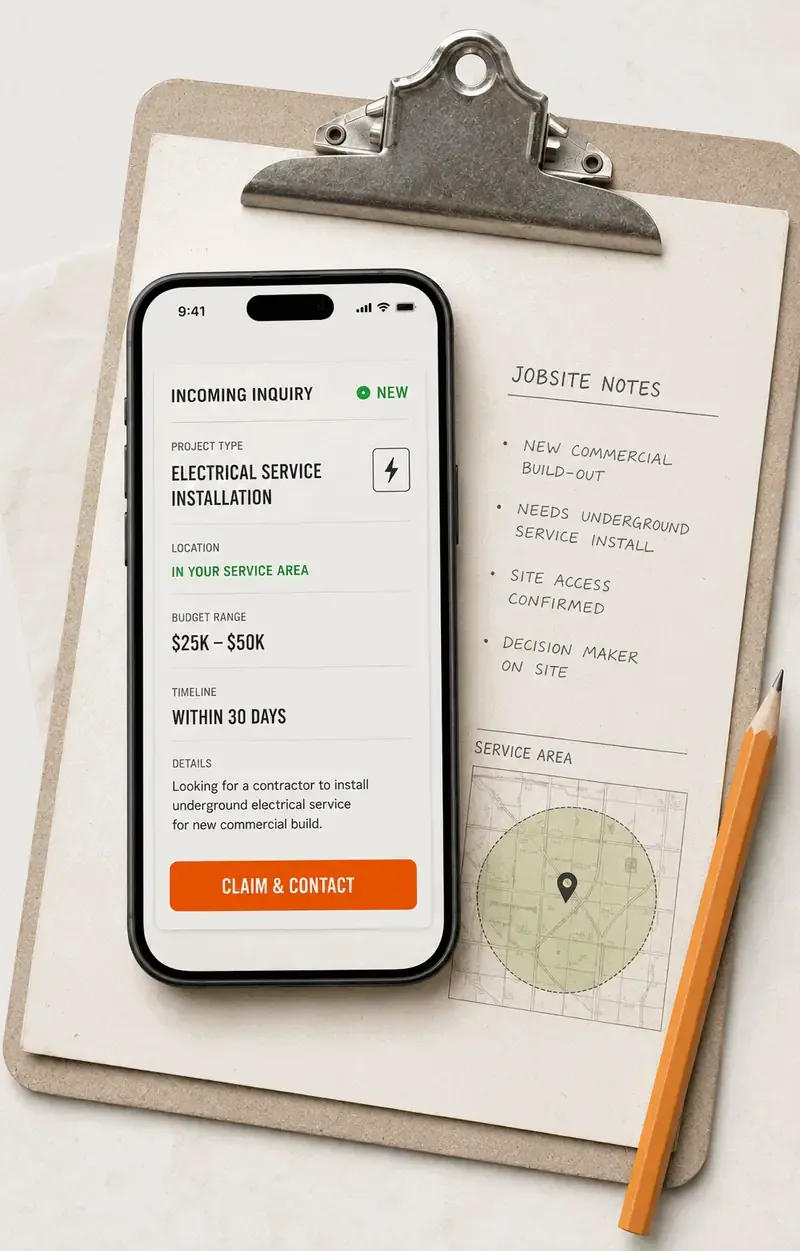
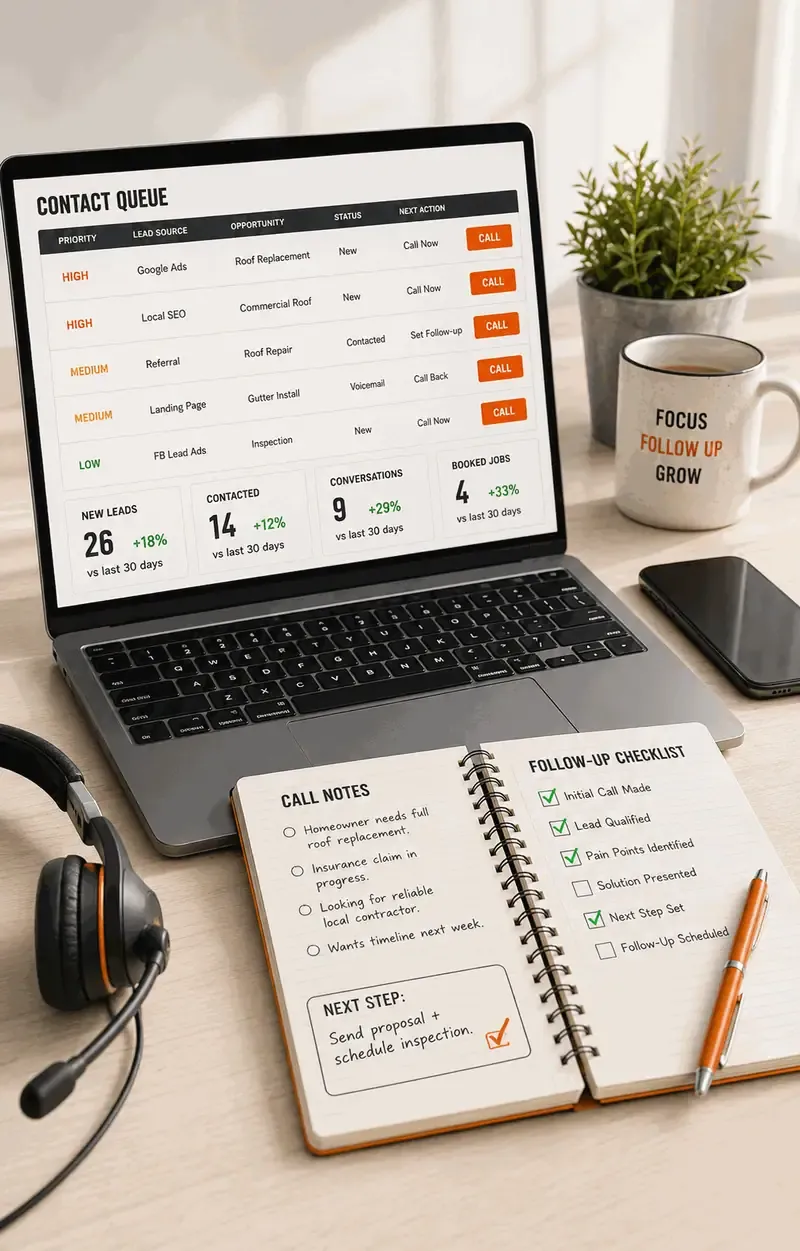
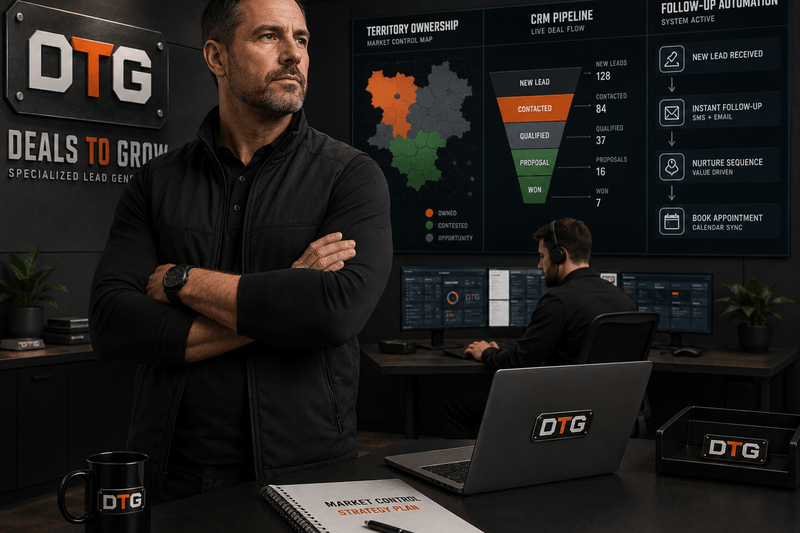
DTG lead capture in action — a roofing job inquiry logged from phone to clipboard intake DTG contact and follow-up on a laptop — new roofing leads flowing into the CRM pipeline
Fully Installed For You

Nine Systems. One Install.

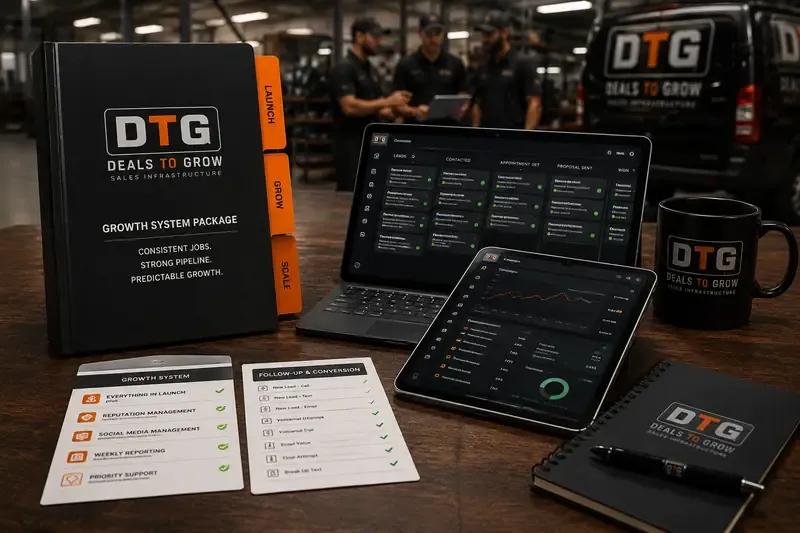
The complete DTG growth system — built, connected, and managed for you. One install kit, nine systems wired into one machine you own. No piecing it together.

01

Meta Ads

Paid campaigns that pull high-intent buyers in your market.

02

Google Ads + LSA

Capture high-intent “near me” search the moment they look.

Grow and Scale plans.
03

AI Receptionist

Answers every lead in under 12 seconds, 24/7.

Grow and Scale plans.
04

CRM (KaChing)

Every lead, estimate, and job in one pipeline you own.

05

Email + SMS Automations

Confirmation, missed-call, quote booking, follow-up, and review & referral requests — automated end to end.

06

Reporting Dashboards

CPL, booked jobs, and revenue — tracked live.

07

Reputation Management

More 5-star reviews, on autopilot.

Scale plan.
08

Social Media Management

Before/after proof your market sees.

Scale plan.
09

Authority Website

Optional add-on — built once, yours to keep.

Three Demand Sources. One System.

Insurance. Retail. Door-To-Door.

The DTG system is calibrated for the three ways roofing work gets won — campaigns, landing flows, and follow-up sequences built for each pipeline.

Roofing operator on a post-storm inspection

Insurance Restoration

Storm-trigger campaigns and aerial damage reports book the inspection while the claim window is open — the urgency ticket won in the first 48 hours.

Two roofers installing shingles at sunset

Cash Retail Replacement

Aging-roof replacements bought on speed and trust. Higher margin and a simpler workflow than claims work — speed-to-lead wins it.

A roofing operator reviewing pipeline and booking numbers with the DTG team

Door-To-Door + Inbound

Already strong at the door? The system adds the inbound layer on top of your canvassing — every knock and every click lands in one CRM.

The Economics

What A Roofing Lead Is Actually Worth.

Roofing has some of the best unit economics in the trades and some of the worst lead sources sitting right next to each other. Most operators never separate the two, so they blame their close rate when the real problem is where the lead came from. Understanding that gap is how you stop renting demand and start owning it.

Start with the ticket. A retail replacement typically runs somewhere in the $8K–$25K range depending on square footage, pitch, and material, and an insurance restoration job often lands higher once the full scope is approved. That is a large number riding on a single phone call. Now look at where most contractors source those calls: shared or aggregator roofing leads that commonly sell for $25–$100 each — and get resold to three or four other roofers at the same time. You are not buying a customer; you are buying a footrace against competitors who got the identical text message. In roofing, where the homeowner signs with whoever answers first, that model is rigged against you before you dial.

This is why generic shared leads fail for roofing specifically. A slow follow-up on a remodel quote is a missed opportunity; a slow follow-up after a hail event is a lost insurance restoration job the homeowner will never re-shop, because a storm-chaser already had them sign. Speed-to-lead is the whole ballgame, and the pattern is consistent across the trade: contractors who answer in seconds rather than hours commonly push close rates into the 30–45% band on exclusive, intent-driven leads. Exclusivity plus speed — not a lower cost per lead — is what actually moves revenue.

Lead quality matters as much as lead cost. A door-to-door canvassing crew and a strong yard-sign presence generate a surprising amount of nighttime search — homeowners who saw your truck on the block and want to size you up before they call. With no inbound layer catching that traffic, those clicks convert for whoever ranks above you. The system closes the loop: canvassing, storm-trigger campaigns, and paid search all feed one CRM, so a knock on Tuesday and a search on Thursday show up as the same homeowner instead of two dead ends. That single view is what lets you follow up in minutes instead of losing the thread between channels.

Owning the system changes the math. When storm-trigger campaigns, an aerial measurement report, and instant follow-up all fire under your own brand and CRM, a single hailstorm can open roughly 90 days of demand you capture instead of chase. The same speed-to-lead engine drives our HVAC lead generation and Windows & Doors systems, and general contractors running several trades at once lean on it to keep every pipeline full — but roofing is where storm-driven urgency makes it hit hardest. Weigh the real cost of an owned pipeline against a lifetime of reselling shared leads and the choice makes itself; see our packages and pricing to run your own numbers.

Why Others Fall Short

Agency. Freelancer. In-House. vs. Owning The System.

Every alternative leaves a gap. Here is what operators run into before they switch to DTG.

Agency boardroom with retainer paperwork on the table

The Agency

You pay a retainer for deliverables, not outcomes. Campaigns pause when the contract does — and you never own the data or the pipeline they built.

Solo freelancer working from a laptop in a coffee shop

The Freelancer

One person, one channel, no system. Strong on ads, weak on follow-up — and when they're unavailable, your pipeline stalls with them.

Contractor managing operations and marketing from a single desk

In-House

You hire a marketer, train them for six months, then they leave. The institutional knowledge walks out the door — and you start over at full salary cost.

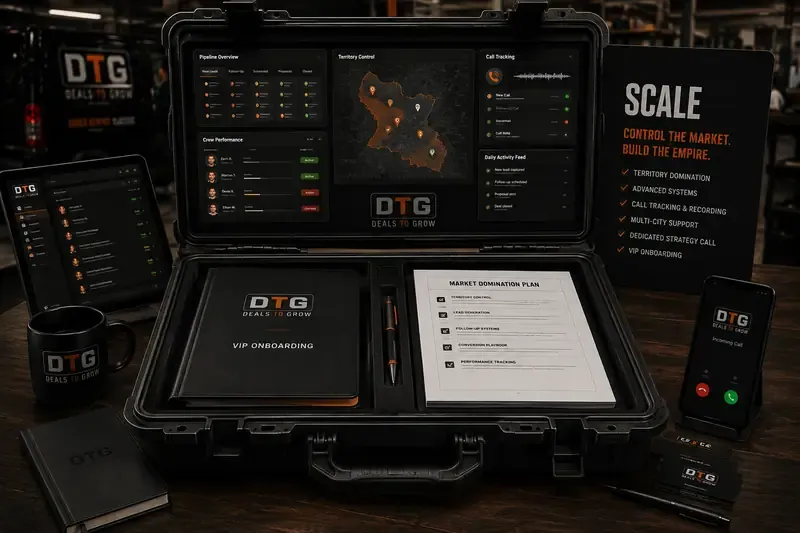
DTG growth-system kit case with campaign, follow-up, and estimate panels

The DTG System

Installed in your business and wired to your number, your CRM, your market. No contracts — and if you add the Authority Website, it's yours forever, even if you cancel.

Straightforward Pricing

One System. Three Tiers.

Plans run $1,500–$3,500 a month. The $2,000 Authority Website is an optional add-on — built once, yours forever, even if you cancel. No contracts.

Launch01
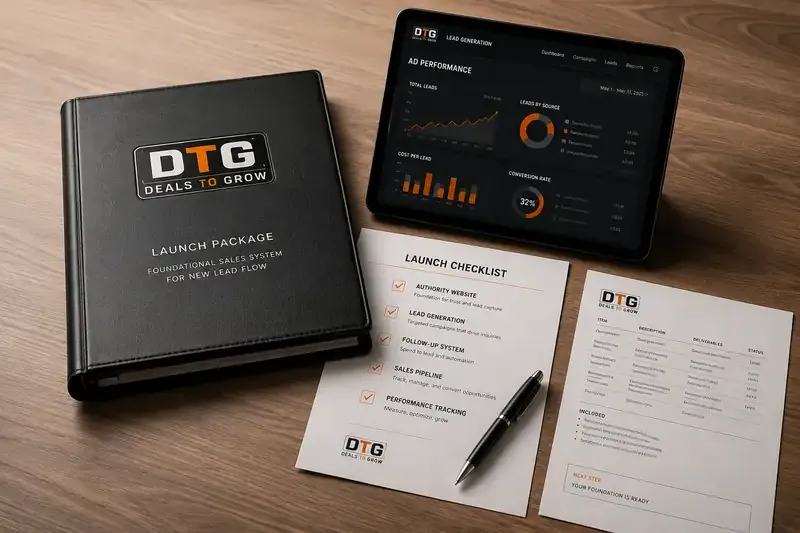
Launch package — the starter install kit
$1,500/mo
Optional: $2,000 Authority Website (recommended)
For solo operators running on word of mouth

End the feast-or-famine. Get your phone ringing on demand.

  • MetaMeta Ads
  • Ad Creatives — Static + Carousel
  • CRM + Ad Sync — your own or KaChing (recommended)
  • Email + SMS Automations — Basic
  • Exclusive Territory
  • Weekly Updates + Monthly Report
  • Google Ads + LSA
  • AI Receptionist
Check Availability Explore Launch ›
No Contracts · Cancel Anytime
Scale03
Scale package — built to dominate a market
$3,500/mo
Optional: $2,000 Authority Website (recommended)
For established crews ready to dominate their market

Stand out. Get booked weeks in advance.

  • Everything in Grow
  • Ad Creatives — + Video
  • Email + SMS — Full + Reactivation
  • Email Campaigns — 2 / month
  • Reputation Management
  • Social Media Management
  • Merchandise Design
Check Availability Explore Scale ›
No Contracts · Cancel Anytime
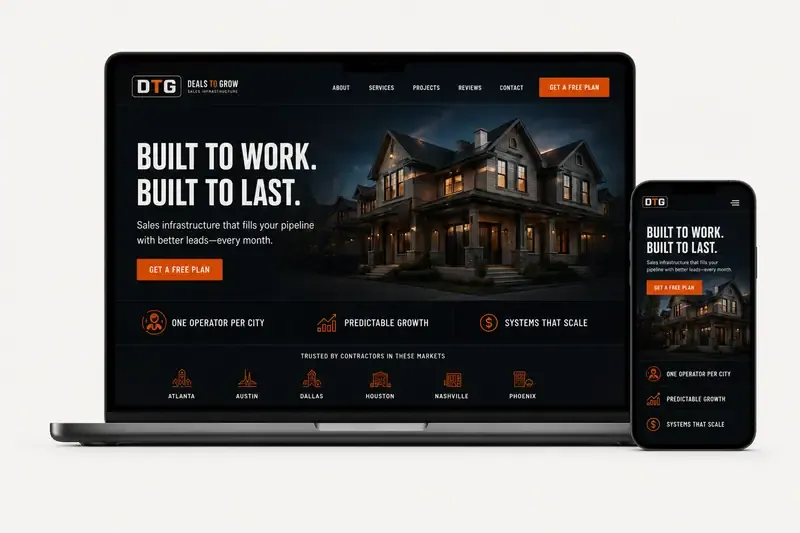
The DTG authority website mockup — a high-converting contractor site built to rank and capture leads
The Foundation · One-Time Build
Authority Website $2,000 one-time

A high-converting website built to rank in your territory, capture leads 24/7, and build trust before the phone rings. A recommended one-time add-on ($2,000) — not bundled into your plan. Built once — yours forever, no matter your plan.

Recommended add-on Yours to keep Built to rank locally

Ad spend is separate, paid straight to Meta and Google — never marked up. Compare full plans ›

Operator Profiles

Who DTG Works Best For.

Three profiles cover nearly every roofing operator we sign. Find yours below — it sets where you start on the 12-month path from launch to scale.

Solo operator working hands-on in the field
OP·01Starts At Launch

The Solo Operator

Great work, full truck — and every job still comes from word of mouth.

  • On the tools all day, with nobody working the pipeline behind you.
  • Feast-or-famine months: booked solid, then quiet with nothing lined up.
  • You want the phone ringing on demand — without buying shared leads.
Launch — $1,500/mo
Growing contractor crew at a job site
OP·02Starts At Grow

The Growing Crew

The reviews are strong. The pipeline isn’t.

  • A crew and real reviews, but lead flow that swings month to month.
  • Calls get missed on the job — you’re ready for Google Ads + LSA and the AI Receptionist to catch them.
  • You want a pipeline you own, steady enough to plan hires around.
Grow — $2,500/mo
Established operator in command at the CRM pipeline dashboard
OP·03Starts At Scale

The Established Shop

Demand is steady. The next fight is owning the market.

  • Crews are busy; you want booked weeks ahead, at better margins.
  • You’re staffing up — sales, fulfillment, office — and the pipeline has to stay ahead of payroll.
  • You want the full machine — video creatives, reactivation, reputation — and the territory locked.
Scale — $3,500/mo

The honest line: DTG isn’t for lead-shoppers, agencies, or contractors who won’t own their ad accounts — and if another operator already holds your metro, it’s closed.

See If You’re A Fit
FAQ

Common Questions.

Q.01I do mostly insurance work. Will this help cash retail too?

Yes. Insurance and retail run as two funnels on the same backend — storm-trigger campaigns and aerial reports book the insurance inspection, while speed-to-lead wins the cash retail job. Retail is higher-margin with a simpler workflow, and the system keeps both pipelines in one CRM.

Q.02Do you handle Xactimate / supplements?

No — that's claims work, not sales infrastructure. We build the system that gets you the inspection. Your in-house process or third-party supplement vendor handles claims.

Q.03Door-knocking is my main channel. Is this for me?

Yes — we add the inbound layer to your D2D, not replace it. Storm-trigger campaigns and automated follow-up run on top of your canvassing, and every knock and every click lands in the same CRM.

Q.04How do you handle multiple crews / capacity?

The inspection booking calendar enforces crew capacity, and the CRM routes jobs by ZIP and crew availability — so a storm surge fills the schedule without burying it.

Q.05How do storm-trigger campaigns launch after a hail event?

The system watches hail and wind reports by ZIP. When a qualifying storm passes through your territory, your storm-trigger campaigns go live automatically — usually the same day — targeting the affected neighborhoods. An aerial measurement report turns each new lead into a real roof estimate fast, so you put a firm inspection time in front of the homeowner in the first 48 hours, while the damage is fresh and before the adjuster finishes the street.

Q.06Can this actually beat the storm-chasers who flood my market after a storm?

That is the point of it. Out-of-town storm-chaser crews win on speed and volume, not loyalty. The system gives you the same speed with a home-field advantage: exclusive territory, so you are not bidding against another DTG roofer, plus an inbound layer that catches the homeowners your yard signs and door-to-door canvassing send searching your name at night. You answer first, from inside the community, with a booked inspection instead of a business card.

Q.07Are cheap shared or aggregator roofing leads worth buying instead?

Rarely. Shared and aggregator leads commonly run $25–$100 and get resold to three or four roofers at once, so you are racing on price the moment you call. On an $8K–$25K retail replacement, one job lost to a faster competitor costs more than a month of owning the system. Exclusive, intent-driven leads that only ring your phone close at a much higher rate — speed and exclusivity, not the lowest cost per lead, are what fill the schedule.

One Operator Per City. We Never Sign Your Competitor.
Roofing · Territory Exclusivity
10Trades
1Per Metro
Check Availability
Your Market, Locked In

Claim Roofing In Your City Before Someone Else Does.

We install one roofing operator per metro and protect it. Once your city is taken, it's gone. See if yours is open.

2-min check · We reply within 1 business day · No obligation.

DTG territory map showing owned zones and active growth routes