
Best CRM for Roofing Contractors in 2026
ServiceTitan vs HubSpot vs GoHighLevel vs full-stack infrastructure — which CRM actually works for roofing companies under $10M?
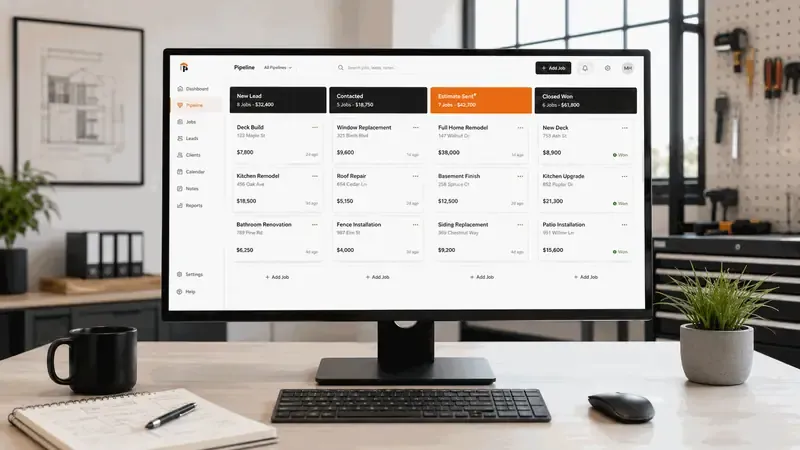
Roofing is a high-ticket, trust-dependent trade with a short decision window. Average job value runs $10,000–$15,000 for a residential reroof, with commercial projects often 3–5x that. When a homeowner calls three roofing companies after a storm, the first one to respond, qualify, and schedule an estimate wins — often regardless of price.
That sequence — respond, qualify, schedule — is where a CRM either earns its place or becomes noise. The problem is that most CRMs aren't built for that sequence at all. They're built for generic sales pipelines, or for enterprise field service operations with 100+ trucks. Neither is what a roofing company doing $2M–$10M annually actually needs.
Why Roofing Contractors Need a CRM That Fits the Trade
Roofing has a few characteristics that make off-the-shelf CRM configurations fail almost immediately:
- Short decision window: Storm-driven leads have 24–72 hours before homeowners move on. The CRM must support immediate response, not a multi-day nurture drip.
- High close-rate from speed: Industry data shows the contractor who responds first wins the job more than 50% of the time — not the one with the best price.
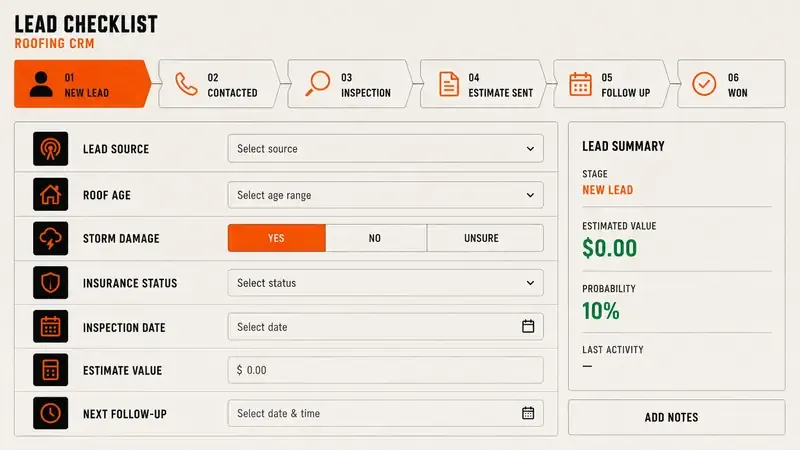
- Estimate-centric pipeline: Unlike SaaS sales, roofing isn't a proposal process — it's an estimate + walk-the-roof + present-and-close. Your CRM stages need to reflect that reality.
- Insurance claim complexity: Storm work often involves a Xactimate claim adjuster process. Most CRMs have zero concept of this workflow.
With an average roofing ticket of $12,000, a single month of better lead response can mean $100,000+ in additional closed revenue. That context matters when comparing CRM costs.
The 4 Most Common Options
ServiceTitan
ServiceTitan is the dominant field service management platform — built for HVAC, plumbing, and electrical at enterprise scale. It has CRM features, dispatching, invoicing, and payroll. For roofing, it's significant overkill unless you're running 20+ crews and need fleet dispatch.
The reality for a sub-$10M roofing company: ServiceTitan starts at $500–$700/month and routinely runs $1,500–$3,000/month at full implementation. Onboarding takes 3–6 months and requires a dedicated admin. The system is built for recurring service calls (furnace tune-ups, drain cleanings) — not for the project-based, estimate-driven sales cycle of roofing.
Bottom line: Powerful if you need full field service ops management. Massively overbuilt — and overpriced — for roofing contractors not running enterprise-scale dispatch.
HubSpot
HubSpot is a legitimate CRM platform. The free tier is genuinely good for basic contact management. The problem is that getting HubSpot to actually work for a roofing pipeline requires significant configuration: custom properties, custom pipeline stages, workflow automation, integration with your lead sources, and someone who knows HubSpot well enough to build it right.
Most roofing companies that try HubSpot either use 10% of its capability (back to glorified contact list territory) or spend $8,000–$15,000 on a HubSpot consultant to configure it — and then it still isn't integrated with their ads, their AI receptionist, or their call tracking.
Bottom line: Great platform, wrong configuration context. You'll get there eventually, but the path is expensive and slow.
GoHighLevel
GoHighLevel (GHL) is a white-label marketing and CRM platform popular with marketing agencies. It has pipeline management, SMS/email automation, call tracking, and basic funnel building all in one. The pricing is more accessible ($97–$297/month).
The catch: GoHighLevel is a tool platform, not a built system. It's highly configurable, which means it requires significant setup to become useful. Most contractors who buy GHL directly get access to an empty platform and spend months watching YouTube tutorials trying to build what they need. And without a properly configured roofing sales workflow and integrated ad campaigns, it's still just a tech stack with no engine.
Bottom line: Right price point and feature set — if someone builds it correctly. The DIY path is a time sink most operators can't afford.
Deals To Grow Full-Stack Infrastructure
The Deals To Grow model is different in structure from the three above. Rather than selling software access and leaving configuration to the operator, we install a pre-integrated infrastructure stack: the KaChing CRM configured for roofing pipeline stages, follow-up automation tied to pipeline stage transitions, and managed ad campaigns. On the Grow and Scale plans, that stack adds an AI receptionist that answers, qualifies, and books leads 24/7, plus Google Ads and LSA management alongside Meta.
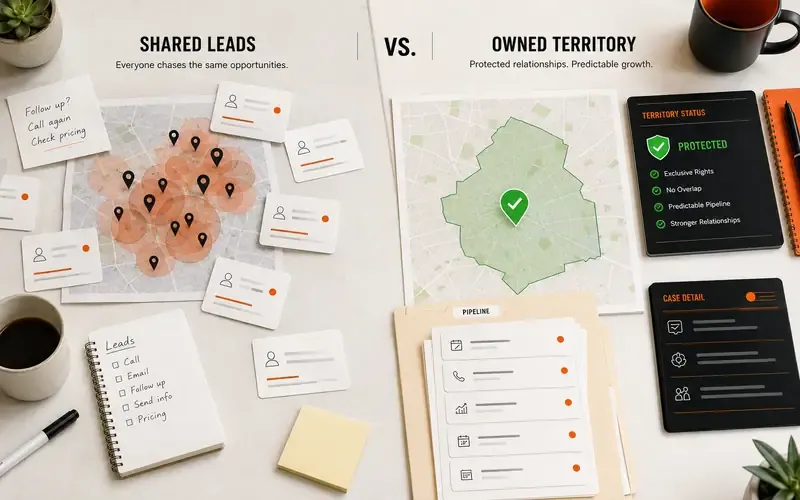
The CRM is owned by the operator — not by us. If you leave, you keep everything. There are no contracts. At a $12,000 average roofing ticket, the payback math is short — run it yourself in the callout below. The system is built to the trade, not configured by the contractor.
The Real Comparison: Feature vs. Outcome
Feature lists don't book jobs. What matters is who does the build work, how long until a lead actually gets answered, and what it costs to get there:
| OPTION | WHO BUILDS IT | TIME TO WORKING | TYPICAL COST |
|---|---|---|---|
| ServiceTitan | Your admin + vendor onboarding | 3–6 months | $500–$3,000/mo |
| HubSpot | You, or a paid consultant | 2–4 months | Free tier + $8K–$15K configuration |
| GoHighLevel | You, via tutorials | Months of evenings | $97–$297/mo |
| Deals To Grow | Installed for you, pre-built for roofing | Live in 5 business days | $1,500–$3,500/mo plans; AI receptionist + Google Ads/LSA on Grow and Scale |
What to Actually Ask Before Choosing
Before selecting a CRM for your roofing company, these are the questions that separate a tool you'll use from one that collects dust:
- Does it have roofing-specific pipeline stages out of the box, or do I have to build them? Building takes time — and most operators build them wrong the first time.
- How does a new inbound lead get into the CRM? If the answer is "someone manually enters it," you've already identified a failure point.
- What happens to a lead at 11pm on a Saturday when my team isn't working? If the answer is "nothing until Monday," you're losing storm-season jobs every weekend.
- Can I see which ad campaigns produce closed jobs — not just leads? Revenue attribution, not just lead count, is what drives smart budget allocation.
- Who owns the CRM data and account? If it's the vendor, you're renting your own business data.
At a $12,000 average roofing job, a CRM + AI receptionist that captures just 2 additional jobs per month that would have otherwise been lost to slow response or no follow-up adds $24,000/month in revenue. Against a $2,500/month Grow plan, that's nearly 10× the monthly cost — from two jobs. The question isn't whether the system costs money — it's whether the absence of it costs more.
The best CRM for your roofing company isn't the one with the longest feature list. It's the one that's configured for your actual sales cycle, integrated with your lead sources, and doesn't require you to become a software administrator to operate. To see if your market is available, visit check availability.
Related Articles.
Want this system installed for your trade?
See if your market is still open, then book a 20-30 minute install call. No contracts.