
HVAC Lead Generation: Owned vs. Rented
Why Angi and HomeAdvisor erode HVAC margins, and how speed-to-lead plus owned infrastructure produces predictable pipeline for HVAC companies.
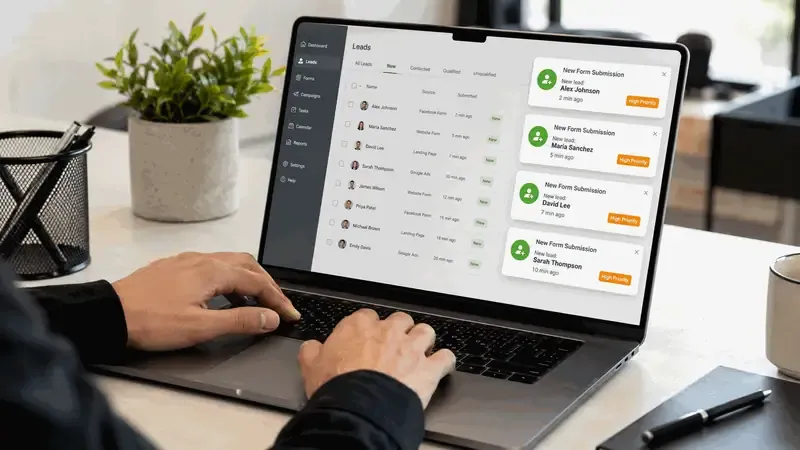
If you run an HVAC company, you've probably tried Angi, HomeAdvisor, or Thumbtack. Maybe you still do. Be honest about the math and it looks like this: you pay $35–$80 per lead, that same lead went to 3–4 other HVAC contractors in your zip code, and whoever calls back first gets the appointment. Often that's not you — your techs are already out on jobs.
Pay-per-lead platforms work — for the platform. They turn your service into a commodity and you into a price competitor. The real problem isn't the cost per lead. It's that the model keeps you hooked to a lead source you don't control. No equity. No brand. Nothing that compounds.
The Pay-Per-Lead Trap
Here's the pay-per-lead cycle most HVAC operators know by heart:
- You buy leads from Angi or HomeAdvisor at $40–$80 each.
- The same lead was sold to 3 other HVAC companies simultaneously.
- You win roughly 20–30% of those shared leads — if your response time is fast.
- Your effective cost per booked appointment is $150–$350.
- To scale revenue, you must increase your spend — there's no compounding, no brand moat.
- If Angi raises prices or you pause spend, your pipeline drops to zero within 30 days.
That last point is the trap. You're renting pipeline from a third party. The moment you stop paying, the leads stop. No asset gets built. You've bought a dependency, not a system.
When four HVAC companies call the same homeowner within 30 minutes, the decision collapses to price and availability. You can't win on quality, reputation, or service depth when the conversation starts as a price auction. Pay-per-lead makes sure you compete on margin.
What "Speed to Lead" Actually Means for HVAC
The HVAC industry average response time to a new inbound lead is 47 minutes. That number matters because research shows responding within the first 5 minutes raises contact rate by 900% compared to responding at 30 minutes. The contractor who answers first — and answers well — wins the appointment.
For HVAC, the urgency is extreme. A homeowner whose AC dies in July isn't comparison shopping. They're calling down the list until someone picks up and can come today. Speed isn't a nice-to-have. It's the whole game.
On the Deals To Grow Grow and Scale plans, an AI receptionist picks up every inbound lead within seconds — day, night, or weekend. It qualifies the caller (what system, how old, what's the symptom, residential or commercial), answers common questions about your services, and books a technician visit straight into your calendar. The homeowner gets an immediate, useful answer. You get a qualified, booked appointment in your CRM without anyone on your crew touching a phone.
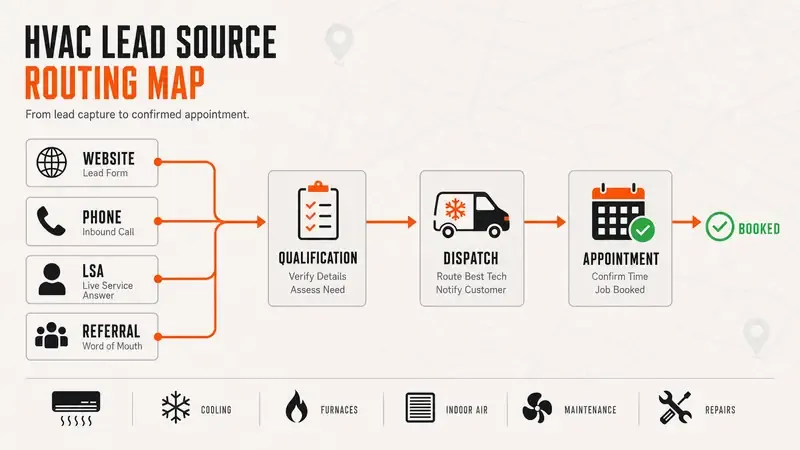
Owned Infrastructure: The Long-Term Play
Owned infrastructure means the assets that generate leads belong to you — not to a lead aggregator. In practice, this looks like:
- Your own Meta and Google ad campaigns, with creative, targeting, and conversion data that improves over time. The performance data compounds — your campaigns get smarter with each month of optimization.
- Your own CRM, with a full history of every lead, every job, every conversion. That data belongs to you and becomes more valuable over time.
- Your own follow-up sequences, automated around your pipeline stages so that no lead goes cold without multiple touchpoints.
- Your own AI receptionist, under your phone number, booking into your calendar. Not a third-party answering service routing calls to a call center.
The economics change completely. With owned infrastructure, cost per booked appointment in home services typically lands around $60–$120 once campaigns are dialed in. You're not paying for shared leads. Every inquiry is exclusive — a homeowner who filled out your form or called your number, nobody else's.
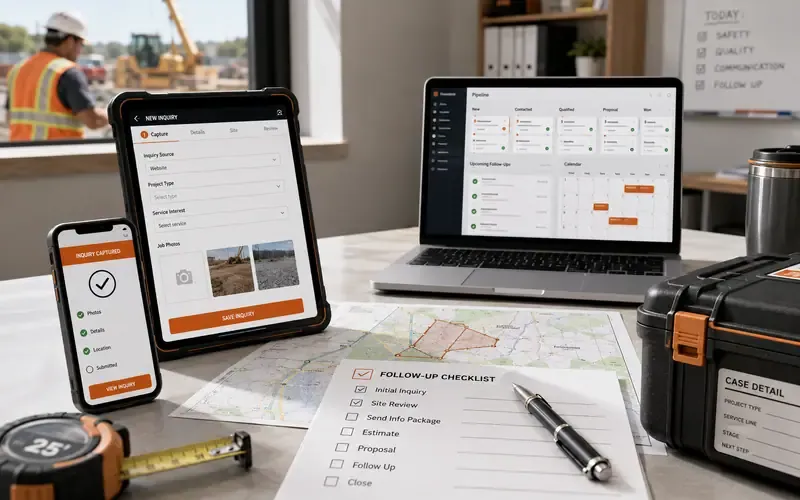
The HVAC Lead Generation Stack That Works
The infrastructure stack for a sub-$10M HVAC company that wants to move off pay-per-lead has four components working in sequence:
1. Targeted Ad Campaigns (Meta + Google) — Campaign creative focused on seasonal pain points (AC failures in summer, furnace failures in fall), service area targeting, and clear calls to action. Not brand awareness — direct response, with a form or call as the conversion event.
2. Immediate AI Response — Every form fill and inbound call gets an answer within seconds. The AI qualifies the prospect and books the appointment without a human touching it. No lead sits waiting while your techs are on a roof unit.
3. CRM with HVAC Pipeline Stages — New Lead → Contacted → Appointment Booked → Service Visit → Quote Sent → Closed. Every stage transition triggers the appropriate automation. Nothing falls through.
4. Follow-Up Automation — Day 1, Day 3, Day 7, Day 14, Day 30. Prospects who don't convert immediately get a persistent, professional follow-up sequence that doesn't require manual effort from your team.
Case Study: JCD Refrigeration (HVAC · Montréal)
JCD Refrigeration is a Dorval, QC shop serving Greater Montreal since 1994 — 12,000+ systems installed, a certified Lennox dealer. It's Deals To Grow Case File 003, one of three verified case files backed by invoices and ad-account exports.
Before the infrastructure install, leads were costing JCD about $80 each. With owned campaigns, automated intake, and CRM follow-up running, cost per lead dropped to $18. Annual revenue went from $5M to $7.5M in year one.
The owner's words: "We can't hire fast enough." JCD has hired 2–3 techs a year, three years running. The constraint flipped from finding leads to finding crew. That's what owned infrastructure does that rented leads never will — the system keeps getting cheaper and the pipeline keeps getting fuller.
What This Costs vs. What It Returns
HVAC tickets vary a lot by job type — service calls run $300–$1,200, system replacements run $6,000–$22,000. The infrastructure investment makes the most sense for companies doing at least $800K/year that want to scale to $2M+ and need a predictable pipeline to get there.
The break-even math is simple. At HVAC replacement tickets, one extra closed system job a month more than covers the monthly cost of the stack. How fast you get there depends on your average ticket and how quickly the campaigns ramp in your market.
The long-term picture: by month 12, your campaigns carry a year of optimization data and run far more efficiently than they did at month 1. Your CRM holds 12 months of pipeline history. Your follow-up sequences have been tuned around what actually converts. None of that exists on a pay-per-lead platform — it evaporates the moment you stop paying.
To see whether your service area is available and get a specific projection for your market, visit check availability.
Frequently Asked Questions.
Q.01How can HVAC contractors stop buying shared leads?
Build owned infrastructure instead of renting pipeline. Run your own Meta and Google campaigns, your own CRM, and your own AI receptionist and follow-up, so every inquiry is exclusive to you. Deals To Grow installs the whole stack in 5 business days, no contracts, with every account in your name.
Q.02Pay-per-lead vs owned lead generation — which is better for contractors?
Owned wins long term. Pay-per-lead platforms resell the same lead to 3–4 HVAC contractors, and your pipeline drops to zero within 30 days of pausing spend. Owned campaigns, CRM data, and audiences are yours and compound — getting cheaper and smarter every month you run them.
Q.03What cost per lead can HVAC contractors expect?
Shared leads run $35–$80 each, pushing effective cost per booked appointment to $150–$350. With owned infrastructure, cost per booked appointment typically lands around $60–$120 once campaigns are dialed in. Case in point: JCD Refrigeration cut cost per lead from about $80 to $18.
Related Articles.
Want this system installed for your trade?
See if your market is still open, then book a 20-30 minute install call. No contracts.