
How to Get More Roofing Leads: The Complete Guide
Most roofing companies have feast-or-famine lead flow. Digital storms bring work; quiet seasons kill momentum. Here's what a complete lead system actually looks like.
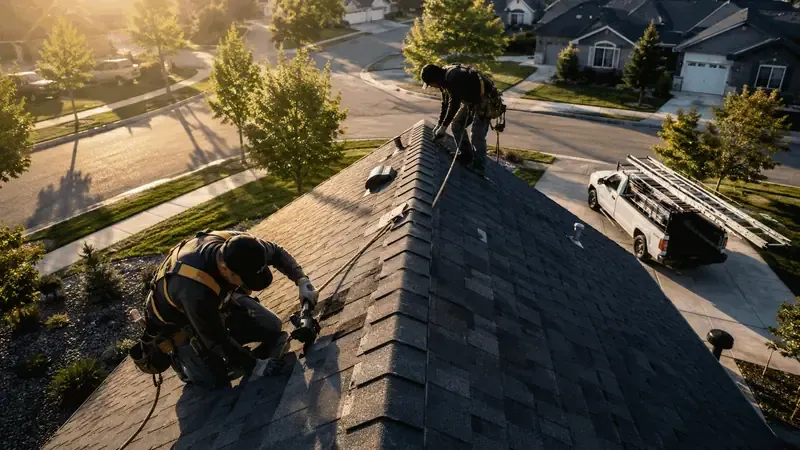
Roofing is one of the highest-ticket, highest-need home services in North America. When a homeowner needs a new roof — whether from storm damage, aging shingles, or a pre-sale inspection — the decision cycle is short and the check is large. Average ticket runs $8,000–$24,000. That's a category where getting the lead right is worth a lot of money.
Yet most roofing companies are still relying on referrals, door-knocking after hailstorms, and the occasional HomeAdvisor lead that three other roofers also received. The result: a calendar full of peaks and valleys, constant uncertainty about next month's revenue, and a business that depends entirely on weather you can't control.
This guide covers what a complete roofing lead generation system looks like in 2026 — the channels, the infrastructure, and the critical steps between a click and a booked estimate that most operators skip.
Why Referrals and Storm Chasing Aren't a Strategy
Referrals are great leads. They close faster, haggle less, and tend to refer their own neighbors. The problem is that you can't control referral volume, you can't scale it, and you can't predict it month-to-month.
Storm chasing — deploying crews and canvassers after a hailstorm — works in the short term but has three structural problems:
- Competition is brutal. Every roofing company in a 200-mile radius shows up after a major storm. You're competing for the same homeowners with worse positioning than a local company with an established brand.
- Margins get compressed. Storm work often means dealing with insurance adjusters, public adjusters, and homeowners who are comparing multiple bids simultaneously. The discount pressure is real.
- Cash flow is lumpy. A great storm quarter followed by a dry Q1 creates the feast-famine cycle that makes roofing businesses hard to grow consistently.
A real lead generation system runs parallel to storm season — building a pipeline of planned replacement work, aging-roof homeowners, and pre-sale inspections that fills the calendar year-round.
The Two Channels That Work for Roofing Leads in 2026
1. Google Local Service Ads (LSA) — Highest Intent
When a homeowner types "roofing contractor near me" or "roof replacement estimate," they already know they need a roofer. Google LSA puts your company at the very top of search results — above organic results, above regular paid search — with a verified badge and direct call connection.
The economics work well for roofing: you pay per lead (call or message), not per click. And an LSA call converts far better than a Meta lead because the homeowner already wants a roofer. They searched, found you, and dialed. That's a warm lead.
Best practices that separate high-performing LSA roofing accounts:
- ✓ Respond to every lead within 5 minutes — Google's algorithm rewards fast responders with better placement
- ✓ Collect reviews consistently — LSA ranking correlates directly with review volume and recency
- ✓ Run Google Guarantee verification — the badge builds instant credibility
- ✓ Set tight service areas by zip code — don't waste budget on leads 90 minutes from your crews
2. Meta Ads (Facebook + Instagram) — Demand Creation
Google captures existing demand. Meta creates new demand. On Facebook and Instagram, you can target homeowners by geography, home value, age of home, and dozens of behavioral signals — before they've decided they need a new roof.
For roofing, Meta works best with two campaign types running simultaneously:
- Storm response campaigns: Geo-targeted at affected zip codes within hours of a hail or wind event. "Is your roof hail-damaged? Free 24-hour inspection." These run on a trigger basis and should be pre-built and ready to launch.
- Planned replacement campaigns: Targeting homeowners of homes 15+ years old with messaging about energy savings, home value, and curb appeal. These run year-round and generate the steady pipeline that smooths out seasonal revenue.
Meta leads are top-of-funnel, which means they need a faster, more aggressive follow-up system than a Google LSA call. The homeowner didn't seek you out — you found them. Your response in the first 5–60 minutes determines whether the lead converts or dies in the inbox.
Contractors who respond within 5 minutes are 9× more likely to qualify the lead than those who respond after 30 minutes. The average roofing company responds in 4–7 hours. This is the single largest lever in roofing lead generation.
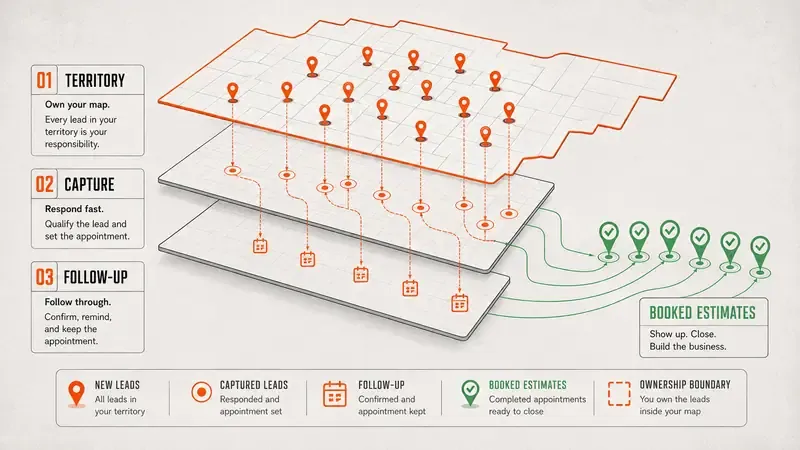
The Infrastructure That Converts Clicks Into Booked Estimates
Running ads is step one. The infrastructure behind the ads is what separates a $3,000/month ad bill with no ROI from a calendar that's booked three weeks out. Most roofing companies miss three critical components:
The Landing Page
Sending ad traffic to your homepage is one of the most expensive mistakes in roofing marketing. Your homepage is a brochure. A landing page is a conversion machine. For roofing ads, a high-converting landing page:
- Has one clear offer: "Free Roof Inspection" or "Get Your Estimate"
- Loads in under 2 seconds on mobile (most roofing clicks come from phones)
- Shows social proof immediately: reviews, photos, years in business
- Has a simple form: name, phone, zip code — that's it
- Has a phone number visible at the top that is answered immediately
The AI Receptionist
When a roofing lead calls your number — whether from an LSA, a Meta ad, or a Google search — what happens? In most roofing companies, it goes to voicemail after hours, or rings through to an owner who may or may not be on a roof somewhere. The lead hangs up and calls the next roofer in the search results.
An AI receptionist answers every call in under 12 seconds, 24 hours a day. It qualifies the lead (storm damage vs. planned, location, home type), books the estimate directly into the calendar, and sends a confirmation SMS to the homeowner. The lead experience is identical at 2pm on a Tuesday or 8pm on a Saturday after a storm.
For roofing specifically, the AI receptionist has a disproportionate impact on storm response. Storms happen on evenings and weekends. Every missed call after hours is a lost estimate appointment — potentially a $12,000 job — that went to a competitor who happened to answer.
The Follow-Up Sequence
Most roofing companies have zero formal follow-up. A homeowner fills out a form, gets a call back the next morning, doesn't answer, and never gets contacted again. That lead cost $40–80 to acquire and was abandoned after one attempt.
A proper follow-up sequence for a roofing lead looks like this:
This sequence captures 30–40% more booked estimates from the same lead volume. You already paid for the lead. The follow-up system determines how many of those leads turn into revenue.
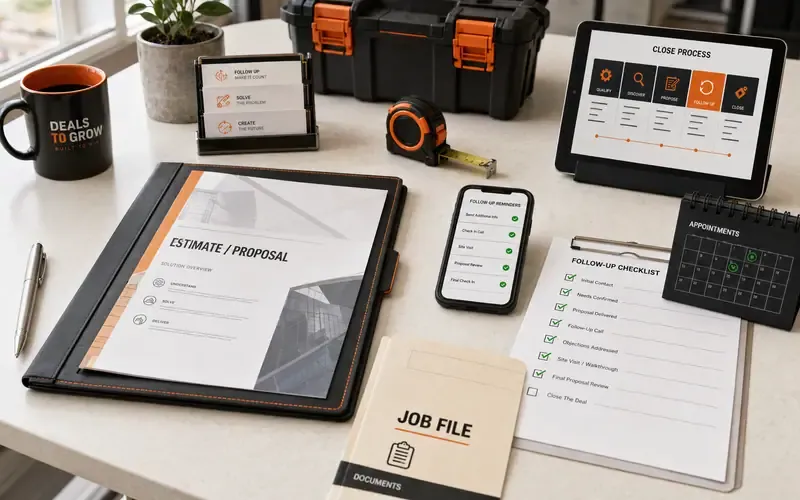
What the Numbers Look Like
Let's build a realistic model for a mid-size roofing company in a market like Dallas or Phoenix:
- Ad spend: $3,000/month (Meta + Google LSA)
- Cost per lead: $35–55 (blended average)
- Leads per month: 60–80
- Booking rate with AI receptionist + follow-up: 65%
- Booked estimates: 39–52/month
- Close rate: 35%
- Signed jobs: 14–18/month
- Average ticket: $12,000
- Monthly revenue from digital: $168,000–$216,000
At a 35% margin on $190,000 average: $66,500 gross profit. Against a $3,000 ad spend and a $2,500/month sales infrastructure cost: net ROI of $61,000/month. That's the math that makes a full system worth it.
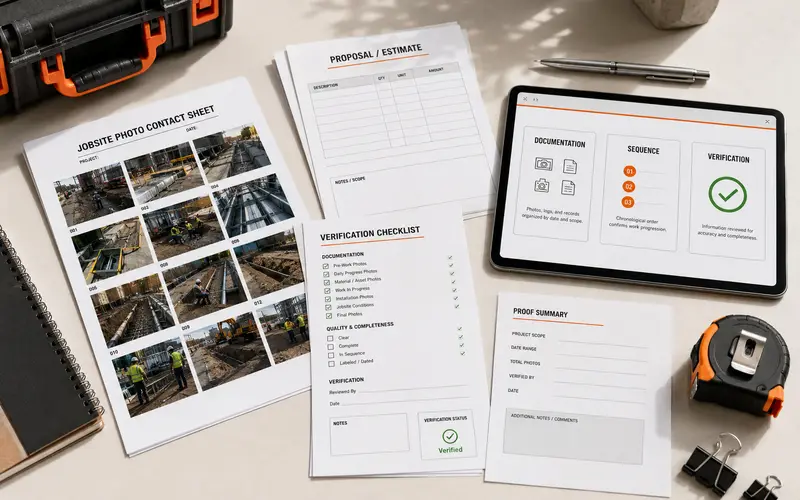
What This Looks Like in Practice
We only publish named numbers we've verified against real invoices and ad accounts, and we don't have a published roofing case file yet. But the system is the same trade to trade. JCD Refrigeration — an HVAC and refrigeration shop serving Greater Montreal since 1994, with 12,000+ systems installed — runs this exact stack: paid ads in front, and a system behind them that answers, qualifies, and books every lead. Their verified numbers:
- Cost per lead dropped from $80 to $18
- Annual revenue went from $5M to $7.5M in year one
- They've hired 2–3 techs a year, three years running, to keep up with the booked work
The owner's words: "We can't hire fast enough." That's what happens when the leads stop leaking between the click and the calendar — the bottleneck moves from the phone to the crew.
Getting Started
If you're a roofing contractor with an established track record and you want a system like this in your market, the first step is checking whether your metro is still open. We work with one roofing contractor per metro — we will never run ads for your competitor across town.
You can check metro availability here or see the full roofing sales infrastructure breakdown.
If you're in an open market, we can typically have your full system live within 5 business days.
Related Articles.
Want this system installed for your trade?
See if your market is still open, then book a 20-30 minute install call. No contracts.