
Pool Builder Marketing: Fill the Pipeline Before Spring Arrives.
Pool construction is a $60K–$100K+ decision homeowners think about for 4–6 months before contacting anyone. Most pool builders are invisible during that entire consideration window. Here's how to be present when it counts.
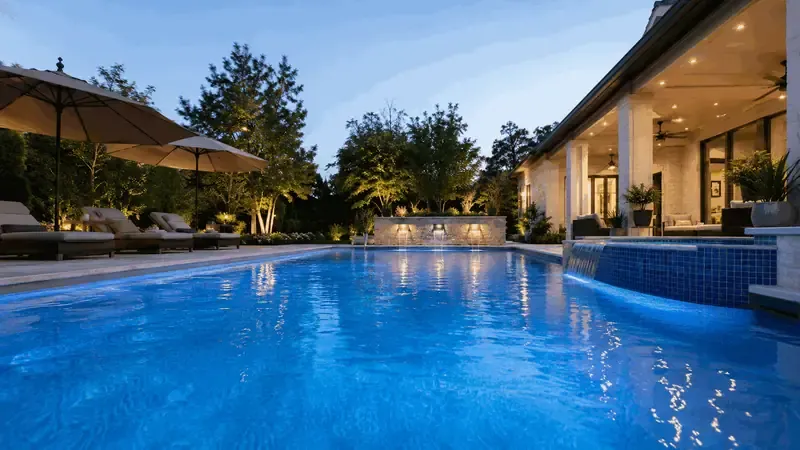
A homeowner who needs a roof decides in days or weeks. A homeowner who wants an in-ground pool decides over months — four to six months of research, backyard pacing, budget talks, and quiet contractor comparisons before they ever contact a single company. That long runway is the most important fact in pool builder marketing. And most pool builders ignore it completely.
The typical pool builder markets on reflex: run ads in February and March to catch homeowners already in buying mode, field consultations through spring, build through summer, repeat. That works if you're happy fighting over the demand that's already in the market. It doesn't work if you want to reach homeowners before they've narrowed their list — the only window where familiarity actually tips the scale.
This post is about filling your spring pipeline before your competitors have even started advertising. The pool builders who enter March with signed contracts and a waitlist didn't get lucky. They started marketing in October.
The Pool Planning Calendar: When Homeowners Are Actually Deciding
The pool buying calendar is predictable enough to plan around almost to the week. Know where homeowners are in their decision by month, and you know which message lands — and which one is wasted money.
Read that calendar again and the lesson is plain: the best homeowners — committed, not price-shopping, ready to sign in February — picked their favorites back in the fall. If you weren't visible during their research, you're a stranger when they start booking consultations. Strangers compete on price. Familiar names compete on trust.
Meta Advertising for Pool Builders: Capturing the Pre-Consideration Buyer
Google Search catches homeowners who are already looking. Valuable — but late. Meta (Facebook and Instagram) reaches the earlier crowd: homeowners who haven't searched yet but look exactly like someone planning a pool in the next 6–12 months.
The targeting gets remarkably specific. Homeowners in your service area, aged 35–55, household income above $150K, recently engaging with home renovation content, outdoor living brands, or competing pool companies' pages. These people aren't Googling builders yet. But they fit the profile of your best customers — and reaching them with the right backyard footage plants the seed.
What works on Meta for pool builders:
- Video testimonials from completed-project clients: A homeowner standing in front of their finished pool talking about the experience consistently outperforms any other creative format — it's credible, aspirational, and emotionally resonant in a way that product specs cannot match
- Project transformation content: Before/after yard transformation videos showing the empty backyard becoming a finished outdoor living space; these perform especially well in the fall consideration phase when homeowners are visualizing
- Process transparency content: Short video walkthroughs showing how a pool build progresses from excavation to water — this reduces the fear-of-the-unknown that causes many homeowners to delay; it also demonstrates expertise and project management capability
- Retargeting sequences: Homeowners who visit your website, watch 50%+ of your video ads, or engage with your content should be placed in a retargeting sequence that keeps you visible over the 4–6 month consideration window; the goal is that when they hit the "time to call someone" moment, you're the first name they think of
Front-load your Meta budget toward the fall: heavier spend September through November while next spring's buyers are forming opinions, tapering into winter as Google Search takes over and catches the now-active searchers. The two channels work as a relay — Meta plants the awareness, Search catches the intent.
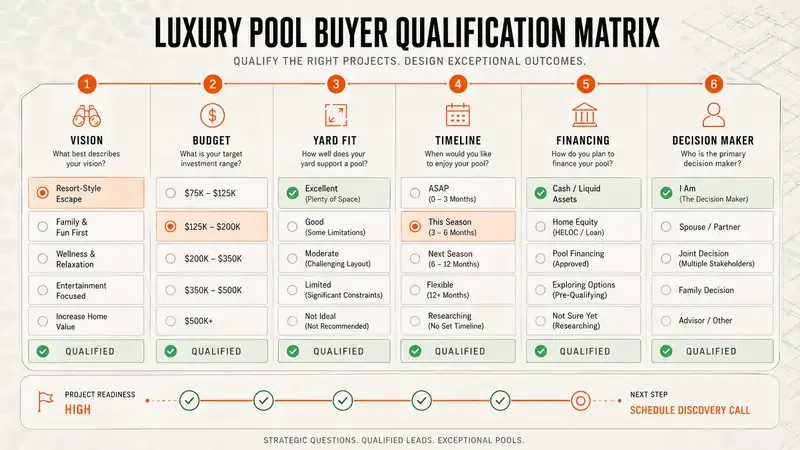
The Tire-Kicker Problem: How to Qualify Leads Before the Design Consultation
A design consultation for a custom pool takes two to four hours. Layouts, site conditions, options, a preliminary estimate — hours of your most skilled person's time, usually given away free. Spend that time on a homeowner with a $25,000 budget for a $75,000 project, or one outside your build area, or one whose spouse hasn't heard about any of this yet, and you don't have a lead problem. You have a calendar full of tire-kickers dressed up as pipeline.
The fix is qualification at the front door: a structured intake that screens every lead for fit before a consultation gets scheduled. An AI receptionist or a branching intake form can handle that first contact and ask the right questions before a designer's afternoon gets committed.
Run these five questions through an AI receptionist call or a branching intake form and the time-wasters filter themselves out — politely, without insulting anyone who's simply not the right fit. The homeowners who pass are qualified enough that the design consultation has a real shot at becoming a contract.
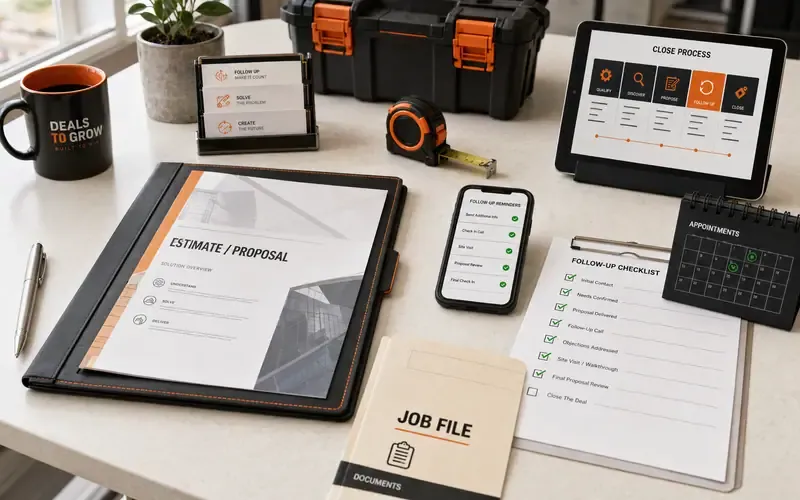
The Pre-Season Contract Close: Why February Is Your Most Important Month
In most markets, February decides the whole construction season. The builders who enter March with a deposited pipeline — slots spoken for, permits in motion, designs being finalized — are playing a different game than the builders still collecting leads.
Build-slot scarcity is real, and you can say so honestly. A pool company that tells homeowners "we have six spring build slots left and expect them to fill before the end of January" is stating something true: the builds are in demand, the schedule is structured, and waiting risks a summer start instead of a spring one. That's not manufactured urgency. That's how capacity-constrained pool construction actually works.
The tactics that drive pre-season contract signings:
- Price lock guarantee: "Sign your contract before February 28th and we'll lock in this year's material costs — no surcharge for price increases between signing and construction." In a market where building material costs have been volatile, this is a genuine value offer that removes a legitimate reason to delay
- Priority scheduling: Early signers get priority placement in the construction calendar — spring starts go to the earliest contracts, later signers go into the summer schedule; present this as a benefit to the early mover, not a penalty for waiting
- Design fee credit: "Book your design consultation this month and we'll credit the consultation fee toward your contract deposit if you move forward." Lowers the barrier to starting the process and creates a financial incentive not to put it off
- Slot visualization: Show homeowners what the build calendar looks like — four spring slots, three summer slots, the remaining availability — so the scarcity is tangible rather than abstract
The key principle: you're not selling a pool. You're selling a spring build slot. "Which builder will I choose?" has no deadline. "Can I still get into the spring schedule?" does. Homeowners who've researched for three months already know which builder they prefer — the pre-season close is about getting them to act on it now, not in March when your calendar is already spoken for.
The Long Nurture: Staying Top-of-Mind for 90–120 Days
Most pool buyers touch a builder's content 8–12 times before signing. That's not an email marketing stat — that's what a $75,000 decision feels like from the homeowner's side. People need to see steady proof of quality and trust before they commit to tearing up their backyard. One great consultation rarely closes it alone.
The nurture sequence for a buyer who's had a consultation but hasn't signed has two jobs: stay present without becoming a pest, and keep stacking proof that you're the right builder. Here's the 90–120 day structure:
Weeks 1–2: Consultation follow-up sequence — design recap email, preliminary plan delivery, financing options overview. Keep momentum from the consultation high.
Weeks 3–5: Project showcase content — email featuring 2–3 recently completed builds similar in scope to what the homeowner described; include client testimonials and final project photography.
Weeks 6–8: Progress update from current builds — a short video or photo essay from a pool currently under construction; shows your process, your crew's professionalism, and the build progression the homeowner can expect.
Weeks 9–12: Seasonal urgency communications — spring scheduling updates, "construction slots remaining" messaging, early-bird incentive reminders for homeowners who haven't yet committed.
Weeks 12–16: Personal outreach from the design consultant — not a marketing email, but a direct call or SMS to homeowners who are still in consideration; address remaining questions, offer a follow-up consultation if design adjustments would help.
The feel of this sequence matters as much as the mechanics. Over 90–120 days, the homeowner should keep seeing the same things: clean work, straight answers, and a builder who cares about their project — not just the deposit. A pool is personal. Who builds it matters to buyers in a way it never does for a furnace swap.
Google Search for Pool Builders: High Intent, High Competition
When homeowners move from dreaming to picking, they go to Google. "In-ground pool installation [city]." "Pool contractor near me." "Cost to build a pool in [city]." These searches signal a homeowner ready to book consultations. The traffic is valuable — and everyone is bidding on it.
Google Local Services Ads are the top placement for pool builders in active search mode. LSA puts your business above standard Google Ads and above organic results, with a Google Guaranteed or Screened badge. On a $75,000 project, that badge does real work — the homeowner is about to let someone dig up their backyard for months, and the vetting signal matters.
Handling peak-season search volume takes systems, not just budget. Run effective LSA and Search campaigns in February and March and the consultation requests will outrun what your team can answer by hand. An AI receptionist or a dedicated scheduling coordinator keeps every call answered — because at peak season in the pool business, a call that hits voicemail is a consultation booked with somebody else.
- Keyword focus: Bid on specific, high-intent terms — "in-ground pool builder [city]", "custom pool installation [city]", "pool construction company near me" — rather than generic "pool" terms that capture a wide range of intents
- Landing page specificity: Send search traffic to a landing page that mirrors the query, shows project portfolio, mentions the design consultation process, and has a clear, single CTA; the homepage is not a landing page
- Review velocity for LSA: Pool construction generates strong reviews from satisfied clients; build a post-project review request system that captures testimonials while the client is still in the glow of a finished pool
- Call tracking and conversion attribution: Track which keywords, ads, and campaigns are generating booked consultations — not just clicks; pool construction's high project value makes the cost of conversion visibility very worthwhile
The pool builders who enter spring with a full committed pipeline started marketing in October. By February, they're booking from a waitlist. The builders who start marketing in March are competing for the leftover demand.
Related Articles.
Want this system installed for your trade?
See if your market is still open, then book a 20-30 minute install call. No contracts.