
Roofing Sales: Close More Estimates Without Discounting
The average roofing contractor closes 23–28% of estimates. Top operators close 38–45%. The difference is process, not price. Here's exactly what separates them.
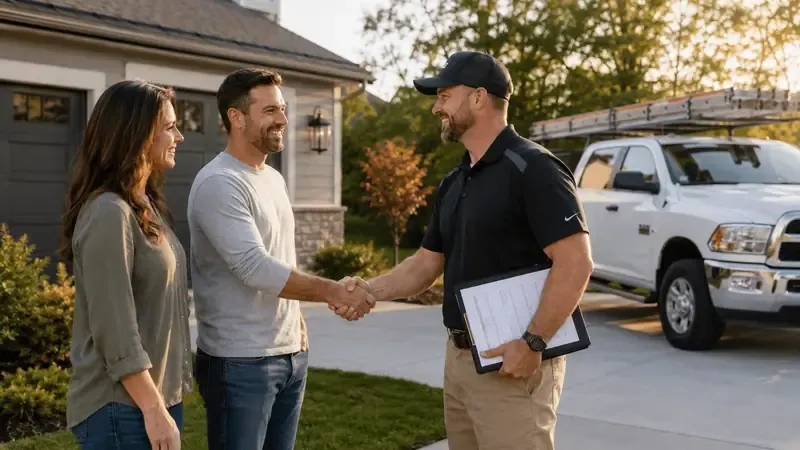
Picture two roofers in the same market. Both run 50 estimate appointments a month on the same ad spend. The first closes 14 — 28%. The second closes 21 — 42%. The second roofer banks 50% more revenue from the same marketing dollars, at the same prices.
The difference isn't better salespeople, lower prices, or luck. It's a repeatable process that builds trust before the estimator pulls up — and follows up hard after the truck leaves the driveway.
Why 25% Is the Median Close Rate (and How to Beat It)
The industry median close rate for roofing replacements is 23–28%. Top-performing operators — the top 15–20% in their markets — close 35–45% of in-home estimates. The gap isn't small. At 50 estimates per month and a $14,000 average job:
- ✓ At 25% close rate: 12.5 jobs/month × $14,000 = $175,000/month
- ✓ At 42% close rate: 21 jobs/month × $14,000 = $294,000/month
- ✓ $119,000 monthly revenue difference — same lead volume, same pricing
Different trade, same lesson: process closes jobs, not discounts. After the sales infrastructure install, Poxy's sales cycle dropped from 14–21 days to 3–7 days — and a single month beat their entire previous year. In the owner's words: "We did more revenue in May than all of last year."
The Three Reasons Estimates Don't Close
Most unconverted estimates fall into one of three categories:
- ✓ Insufficient trust before the visit — the homeowner hasn't decided whether to trust you yet, so the estimate becomes a pure price comparison
- ✓ An in-home presentation that leads with price — the homeowner hears "$14,500" before they understand what makes your roof worth it
- ✓ No follow-up system after the estimate — 72% of homeowners don't decide the same day, and single-touch contractors lose the "undecided" pile to competitors who follow up 5–7 times
Authority Positioning Before the In-Home Visit
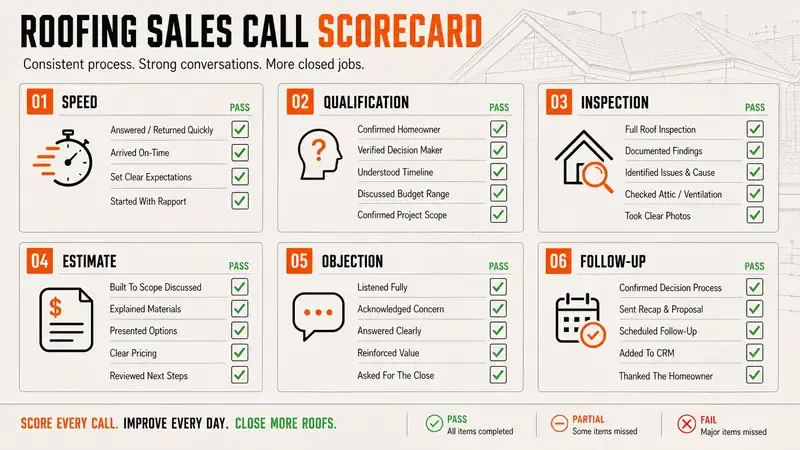
The estimate appointment starts before the estimator arrives. The homeowner is forming impressions from the moment they booked — and what they see in that window shapes how they'll receive your quote.
The In-Home Estimate Structure That Closes at 40%+
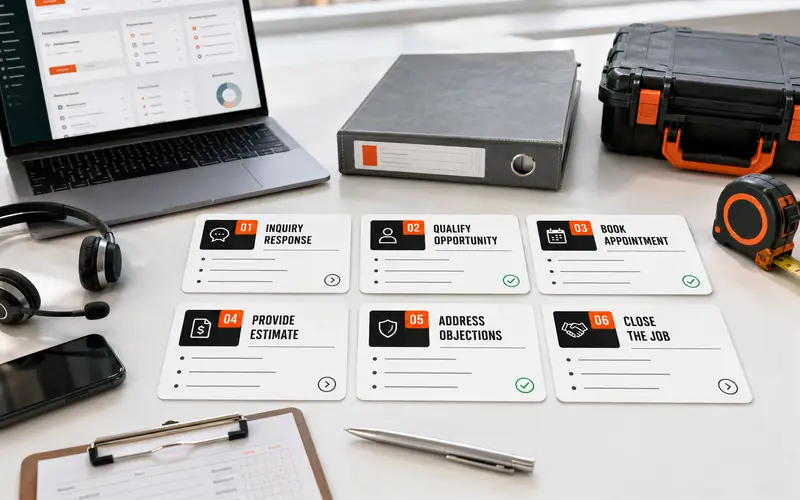
The in-home visit has a specific sequence that high-closing estimators follow. It's not a script — it's a structure:
Contractors who present three tiers — Good, Better, Best — close at 15–20% higher rates than those who present a single quote. The middle tier gets chosen 68% of the time. Offer choice; it converts better than a take-it-or-leave-it number.
Following Up After the Estimate
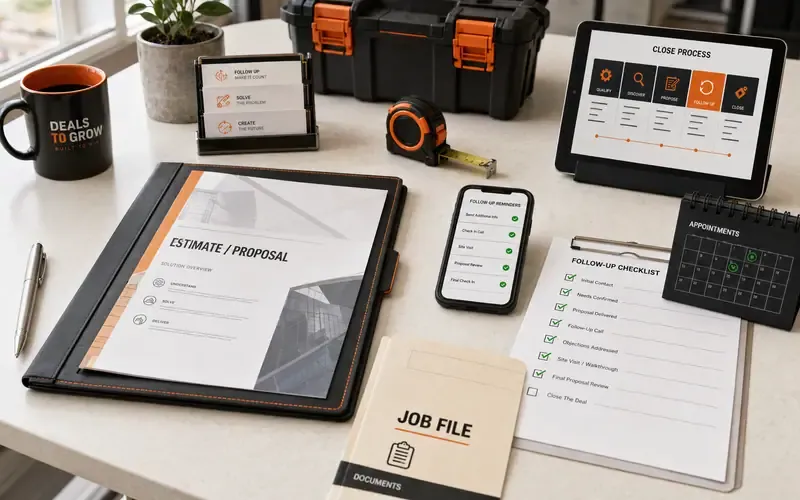
Most contractors send one follow-up — then mark the lead as "pending" and wait. Homeowners who need 5 touches to decide give the contract to whoever touches them 5 times. Here's the sequence that converts 18–25% of "still thinking" leads:
Tracking What's Working
You can't improve what you don't measure. The minimum tracking infrastructure for roofing sales:
- ✓ Close rate by lead source — are Google Ads leads closing at the same rate as LSA leads?
- ✓ Close rate by estimator — if you have multiple estimators, variance reveals who needs training
- ✓ Close rate by proposal age — how does close rate change at 1 day, 3 days, 7 days, 14 days after estimate?
- ✓ Revenue per estimate — total revenue ÷ total estimates; small upstream improvements show dramatically here
The full CRM pipeline, automated follow-up sequences, and attribution reporting are part of the Deals To Grow infrastructure stack. See how the system works or book a scoping call to talk about your current close rate.
Related Articles.
Want this system installed for your trade?
See if your market is still open, then book a 20-30 minute install call. No contracts.